Outdoor Fireplace Chimney Height Near Covered Rooflines
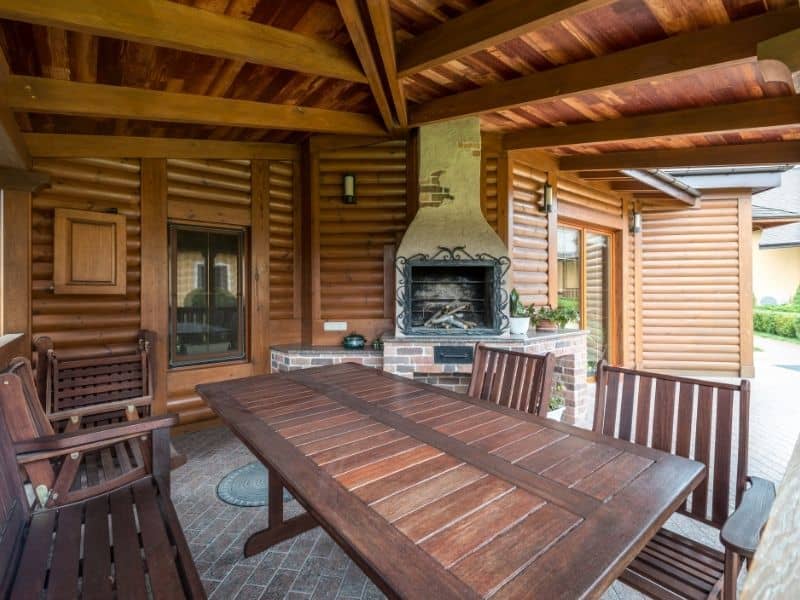
An outdoor fireplace under a covered patio does more than add warmth to a backyard. It also adds a chimney that has to clear the roof above it. Get the height wrong and smoke can drift back under the roof, stain the ceiling, or set off a smoke detector inside the house. Get it right from the start and the fireplace works the way it should for years.
How Covered Rooflines Affect Outdoor Fireplace Chimney Height
A chimney height can’t be picked in isolation. The covered roof next to or above the fireplace changes the math.
Once a chimney sits near a roof, the roof becomes part of the equation. The spot where the chimney passes through or near the roofline, along with any nearby roof sections, walls, or overhangs, all play a part in how tall that chimney needs to be. A short chimney that would work fine out in the open can fail badly once a roof is close by.
This matters most on covered outdoor living spaces, where a fireplace often sits tucked under an extended roof for shade and shelter from rain. That roof is exactly what can trap smoke if the chimney doesn’t clear it by enough.
Understanding the 3-2-10 Chimney Height Rule
Most chimney codes lean on a simple guideline masons call the 3-2-10 rule.
The rule works like this. The chimney has to rise at least 3 feet above the point where it comes through the roof. It also has to clear any part of the building within 10 feet by at least 2 feet. So a chimney could clear its own roof penetration by 3 feet and still fall short of code if a nearby wall or higher roof section within that 10 foot range isn’t cleared by 2 feet as well.
Both parts of the rule have to hold true. Meeting one part and missing the other still leaves a chimney that draws poorly or vents smoke where people don’t want it.
Why Roof Pitch and Ridge Distance Change the Final Height
Two outdoor fireplaces can look almost the same on paper and still need very different chimney heights. The difference usually comes down to the roof.
A steep roof pitch pushes the required chimney height up fast. As the roof rises more sharply per foot of run, the chimney has to rise with it to stay clear of that slope within the 10 foot radius. A shallow roof gives more breathing room, so the chimney can often stay shorter and still meet code.
Distance to the ridge matters too. A fireplace placed close to the highest point of the roof faces a taller obstacle nearby. Move the same fireplace farther from the ridge, or place the chimney penetration lower on the slope, and the numbers can shift enough to change the whole plan.
The location of the penetration point itself, meaning exactly where the chimney passes near or through the roof structure, shapes the surrounding roof geometry the chimney has to clear. Shift that point a few feet in either direction and the required height can change along with it.
Plan the Chimney Before Framing the Covered Patio
The order construction happens in matters just as much as the numbers do.
Fireplace location, roof shape, and expected chimney height should get worked out before a single roof truss goes up. Once framing is finished, changing any of those pieces gets expensive fast. A contractor might have to tear back roof sections, rebuild part of the structure, or add chimney extensions that look bolted on instead of built in.
Working out the chimney height early gives everyone room to adjust the layout instead of the chimney. Maybe the fireplace shifts a few feet away from the ridge. Maybe the roof over that section gets a slightly different pitch. Those changes are simple on paper and painful after the roof is closed in.
A few things worth confirming before framing starts:
- Exact fireplace and chimney penetration location relative to the covered roof
- Roof pitch over and near that section
- Distance from the chimney to the ridge and to any nearby walls or roof breaks
- Manufacturer height requirements if a prefabricated chimney system is going in
Verify Auburn Requirements Before Masonry Construction Begins
East Alabama’s outdoor living projects often pair a masonry fireplace with a covered patio, which makes this height question come up often around Auburn.
Before laying a single block, plans should be checked against the code requirements that apply to that specific project. Auburn lists the 2021 residential code among its adopted building standards, and manufacturer instructions for any prefabricated chimney components carry their own weight alongside that code. A masonry contractor familiar with local permitting can confirm which figures actually apply to a given roof and fireplace layout before the design gets locked in.
Skipping that check doesn’t save time. It just moves the problem to inspection day, when a chimney that falls short means reopening finished work. A short conversation with the local building department or a licensed mason early in the planning stage settles the question once, before concrete and block make changes costly.
An outdoor fireplace built next to a covered roofline can be a great addition to a backyard for years to come. The chimney just has to clear that roof the right way from day one.