Brick Patio or Walkway Installation: What Affects the Cost
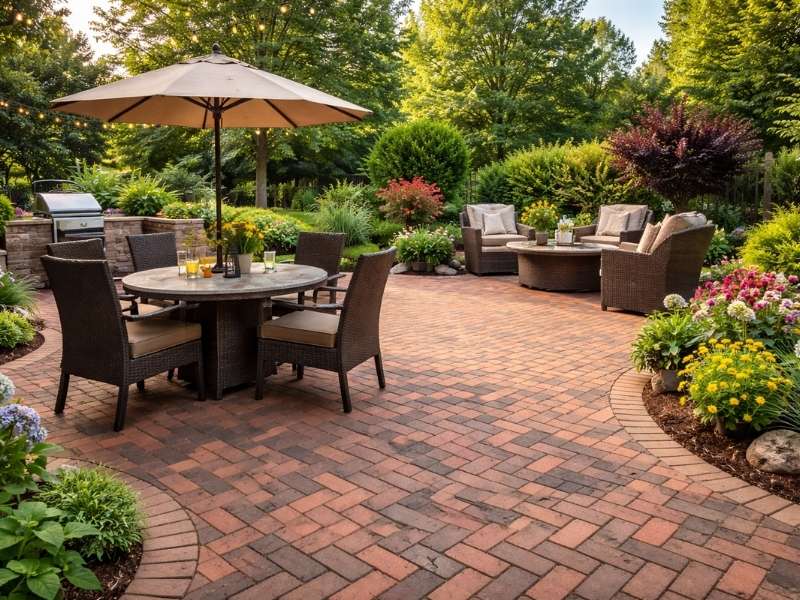
Getting a brick patio installed is a solid investment. But the final price can swing by thousands of dollars depending on decisions made before the first brick goes down. Knowing what drives that number helps you plan smarter and avoid budget surprises mid-project.
Why the Size and Shape of the Project Matter
Square footage is the starting point for any estimate. The more ground you cover, the more materials and labor you pay for. A small 10×10 patio runs in a completely different price range than a 20×30 outdoor entertaining area.
Shape matters just as much as size.
A standard rectangle is the cheapest layout to build. Straight lines mean clean cuts, predictable material waste, and faster installation. Add a curve or a rounded border and the cost goes up. Curved edges require more precise cutting, more wasted brick, and more time on the job.
Custom layouts of brick with multiple angles, inset patterns, or irregular borders can add 20 to 40 percent to the total cost compared to a basic square or rectangle of the same square footage.
What Developers Should Know
Plan the footprint before finalizing a budget. A design that looks simple on paper can become expensive in the field if it has too many directional changes or tight radius curves.
How Material Choices Change the Price
Not all bricks cost the same. Standard clay pavers are the most affordable option and work well for most residential projects. Tumbled brick, reclaimed brick, and specialty colors or textures cost more per unit and often require more care during installation.
Here is what affects material cost most:
- Brick type: Clay pavers, concrete pavers, and natural stone vary significantly in price per square foot.
- Color and finish: Standard red brick costs less than custom blends or aged finishes.
- Pattern complexity: Running bond uses the fewest cuts. Herringbone and basketweave require far more precision cutting, which means more waste.
- Edging materials: Soldier course borders, steel edging, or concrete borders add material and labor costs.
- Quantity buffer: Most contractors order 10 to 15 percent extra to account for cuts and breakage.
In Auburn’s climate, choosing a brick rated for outdoor use matters. Materials that absorb water and cannot handle freeze-thaw cycles will crack or shift sooner than expected.
Why Site Preparation Can Increase Costs
The work that happens before the first brick is placed often determines whether the finished product lasts five years or twenty-five years. It also determines how much you spend getting to that point.
Basic site prep includes:
- Removing existing grass, concrete, or gravel
- Excavating to the correct depth (typically 6 to 8 inches for a patio base)
- Grading and leveling the surface
- Compacting a gravel base layer
- Adding sand bedding before setting brick
Straightforward flat lots in good soil are the cheapest to prep. Problems start when the site has challenges.
Slopes require grading work. Poor drainage requires French drains or gravel channels. Soft or unstable soil may need additional compaction or base depth to prevent settling. Tree roots near the project area can add removal costs.
Labor and Installation Methods That Affect the Budget
Labor is typically 50 to 60 percent of the total project cost for brick patio and walkway work. The complexity of the installation drives that number up or down.
Simple running bond: Bricks laid in straight horizontal rows. Fastest to install. Fewest cuts. Lowest labor cost.
Herringbone: Bricks set at 45-degree angles in a V-pattern. Requires diagonal cuts at every edge. Takes considerably longer to lay correctly.
Basketweave: Alternating pairs of bricks in perpendicular groups. Looks clean and traditional. More time-consuming than running bond.
Custom medallions or inset patterns: Specialty designs within the field of the patio. These require experienced masons and significantly more time.
Labor rates in Auburn vary by contractor experience and workload. Expect to pay more for crews with established track records on complex installations. Cutting corners on labor selection often shows up in the finished product within a year or two.
Features That Add to the Final Cost
Most brick patio projects grow once the initial scope gets reviewed. Homeowners and developers start adding features that improve how the space functions and looks. Each addition is a legitimate value-add, but each one also increases the budget.
Common additions and their cost impact:
- Retaining edges or seat walls: Structural brick walls along the perimeter add significant material and labor. They also require their own foundation preparation.
- Steps: Each step involves excavation, a concrete footing, and careful brick setting. A single set of two steps can add $800 to $1,500 or more depending on width.
- Lighting: Low-voltage in-ground or wall-mounted lighting requires electrical rough-in and adds both material and coordination time.
- Connections to existing landscaping: Tying the new patio into existing garden beds, trees, or drainage systems takes additional planning and fieldwork.
- Drainage features: Channel drains, pop-up emitters, or redirected downspouts protect the installation and prevent pooling, but they cost extra to install.
The best approach is to identify which features matter most before the project starts. Adding them during the design phase costs less than retrofitting them after installation is complete.
Frequently Asked Questions
What is the average cost to install a brick patio?
Most residential brick patio projects in Auburn run between $15 and $30 per square foot installed, depending on design complexity, site conditions, and materials chosen. A 200-square-foot patio typically costs $3,000 to $6,000 or more.
How long does brick patio installation take?
A standard 200- to 300-square-foot patio takes a professional crew two to four days from site preparation through final cleanup. Larger or more complex projects may take longer.
Does the brick pattern affect how long the patio lasts?
The pattern itself does not affect durability. The quality of the base preparation, drainage design, and materials used has a much greater impact on how long the patio performs over time.
Is brick more expensive than concrete for a patio?
Brick generally costs more upfront than poured concrete. However, individual bricks are easier to repair than cracked concrete slabs, which can make brick a cost-effective choice over the long term.
Can a brick walkway be added to an existing patio later?
Yes. A brick walkway can be added later, but matching the existing brick color and pattern is often easier when both are planned at the same time. Older bricks may no longer be available, and the new walkway must connect properly to the existing base.