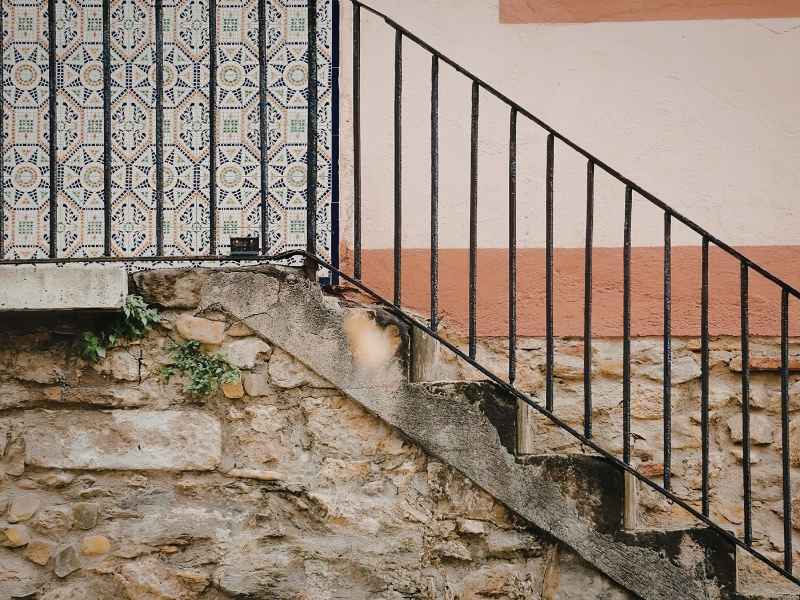
A stone mason looks at the stone, the backing behind it, and how water will move around the anchor before any drill touches the surface. Plan the anchors with the masonry in mind, and the railing stays solid while the steps stay intact. A wobbly handrail on stone steps usually starts with a hole drilled in the wrong place. Set it too close to an edge, through a hidden crack, or into thin veneer, and the stone loosens around the post within a few seasons.
Assessing Stone Mason Surfaces Before Installing Exterior Handrail Anchors
Start by figuring out what the railing will actually be anchored into. Solid stone treads, stone veneer over concrete, stone caps on a block wall, and dry-laid stone steps all behave differently. A method that works on one can fail on another.
Check the condition of the stone next. Problems hidden now become loose railings later. Look for these warning signs.
- Hairline cracks or open seams near the planned post locations
- Spalling, where the surface flakes or pops off
- Loose or hollow-sounding pieces when tapped
- Deteriorated mortar joints between stones
- Thin veneer pieces with no solid backing behind them
Damaged stone should be repaired before anchors go in. Drilling into a cracked tread almost guarantees the crack will grow. If the steps connect to a stone patio or walkway, check those transitions too, since settling there can stress the railing over time.
Choosing Anchor Types for Different Stone Mason Conditions
Anchor choice follows the material and the railing design. Each method suits certain stone and struggles in others. Common approaches include these.
- Core-drilled holes with posts set in non-shrink grout or anchoring cement
- Base plates fastened with adhesive or mechanical anchors into solid stone or concrete
- Side-mounted brackets attached to the face of a step or wall
- Anchors that pass through veneer into the concrete or block behind it
Thin veneer usually can’t hold a railing on its own. The anchor needs to reach solid backing, and the veneer around it needs support so it doesn’t pop loose. Dry-laid stone may need a concrete footing or a different mounting location entirely.
Railing height, spacing, and load requirements may come from building codes, accessibility standards, or the railing manufacturer, and they vary by project and jurisdiction. Commercial and multifamily projects often need engineered railing designs. Ask your contractor which requirements apply before choosing hardware.
Positioning Handrail Anchors Without Weakening Surrounding Stone Mason
Edge distance matters more than most people expect. An anchor set too close to the front or side of a tread can split the stone when someone leans on the rail. Keep posts back from edges based on the anchor manufacturer’s guidance and the condition of the stone.
Avoid joints and seams where you can. A hole drilled through a mortar joint or along a natural seam has less material holding it. Plan post spacing around the stone layout instead of forcing a standard spacing that lands on weak spots.
Think about how people will use the rail. Posts should land where hands naturally reach, at the top and bottom of the steps and at landings. On a retaining wall or raised patio, railings may need to sit on caps or footings that were designed to carry them.
How a Stone Mason Handles Drilling and Anchor Installation
Drilling stone takes patience. Stone mason often use diamond core bits with water to cut clean holes, since aggressive hammer drilling can fracture brittle stone. Bit size, depth, and technique follow the anchor type and the stone.
Clean holes matter. Dust and debris left inside weaken grout and adhesive bonds, so each hole gets blown out and cleaned before the anchor is set. Posts are checked for plumb and alignment before the setting material cures.
Curing time comes next. Grout and adhesives need time to reach strength, and loading the rail too early can loosen it. Ask your stone mason how long to wait before anyone uses the railing.
Preventing Water Intrusion and Maintaining Long-Term Anchor Stability
Water is the long-term enemy of any anchor in stone. When it collects around a post, it can rust steel, wash out grout, and stain the surface. In areas with freeze-thaw cycles, trapped water expands and can crack the stone around the anchor.
Good installations shed water away from the post. The top of the grout or setting material should slope away, and a compatible sealant can close the joint where the post meets the stone. Post caps and well-designed base plates help too.
Material choice affects durability. Galvanized steel, stainless steel, and powder-coated aluminum each handle weather differently, and rust stains on light stone are hard to remove. Inspect the railing once a year for looseness, cracked sealant, or staining, and fix small issues before they spread.
Frequently Asked Questions
Should a stone mason install my handrail or a railing contractor?
Often both trades work together. The railing contractor builds and fits the rail, and the stone mason handles drilling, setting, and any stone repairs. That split protects the stone and the railing. Ask both how they’ll coordinate before work starts.
Can handrails be anchored into stone veneer?
Usually only if the anchor reaches solid backing behind the veneer. Thin veneer on its own isn’t built to carry railing loads. The stone mason may need to remove and reset some veneer around each post. Discuss the backing material before choosing hardware.
Why is my existing railing loose?
Common causes include cracked stone, failed grout, rusted anchors, or water damage around the post. Settling of the steps or a nearby walkway can also stress the rail. A stone mason can inspect the base and recommend repair or reinstallation. Fix it soon, since a loose rail is a safety concern.
