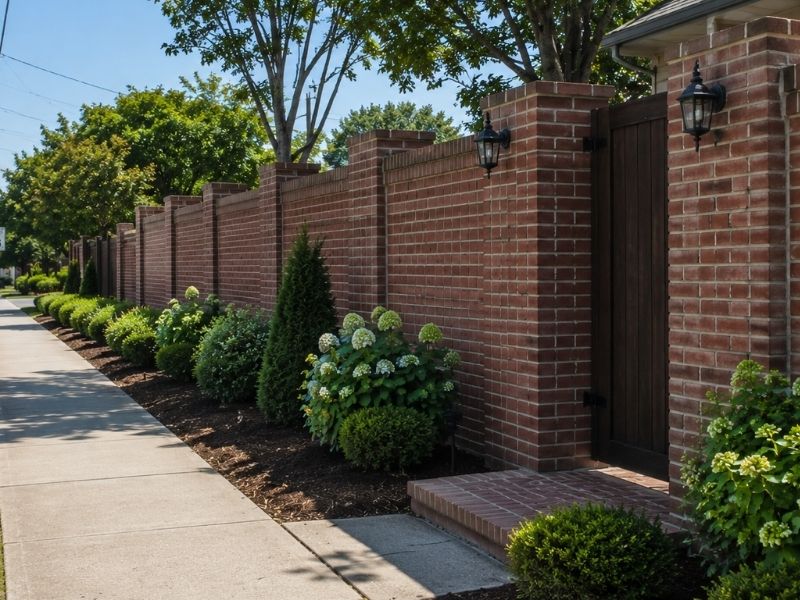
A privacy wall does two jobs at once. It blocks the view from the street, and it still has to look good sitting in front of your house. This balance matters more than people think. Many local lots sit close to busy roads, so a brick wall has to do real work without turning the yard into a fortress. Before any brick goes up, most builders start with a construction survey. This step maps the lot lines, checks the slope, and marks where utilities run underground.
Choosing the Right Location for a Brick Privacy Wall Near a Busy Road
Placement decides almost everything about how well a wall works. Put it too close to the road, and it might block sightlines for drivers backing out of the driveway. Put it too far back, and it loses its whole point.
Walk the property at different times of day first. Watch where headlights sweep across the yard at night. Notice which spots catch the most road noise. These details tell you where the wall needs to sit.
Corners deserve extra care. A wall that wraps a corner lot has to stay low near the intersection so drivers can see each other clearly. Most cities, including Auburn, have rules for this called sight triangles. A quick call to the local planning office clears up any confusion before construction starts.
Driveway access matters too. The wall should frame the entrance, not fight against it. Leave room for cars to turn without scraping brick, and think about how delivery drivers and guests will move around the barrier.
Privacy Wall Height and Layout: Creating Separation Without Blocking Curb Appeal
Height is where most homeowners get stuck. Go too tall, and the house looks boxed in. Go too short, and the wall barely does anything.
A wall between four and six feet tall usually strikes the right balance for front yards. It blocks eye-level views from the sidewalk and street while still letting light and air move through the space. Anything taller starts to feel like a compound, especially on a smaller lot.
Layout matters as much as height. A single straight run of brick can look flat and heavy. Breaking the wall into sections, with small gaps or staggered heights, softens the look and keeps the yard from feeling sealed off. Some homeowners add a lower section near the front door and a taller run along the road side. This mix gives privacy where it counts and openness where it does not.
Length matters too. A wall that only covers part of the yard often looks unfinished. Plan the layout so it wraps naturally around the space you want to shield, not stopping at an odd point.
Brick Colors and Wall Details That Complement the Home
A privacy wall should look like it belongs to the house, not like something dropped in afterward. Matching the brick color and texture to the home’s exterior is the fastest way to pull that off.
If your house uses a warm red brick, a wall in a cooler gray tone will stand out for the wrong reasons. Pulling a sample brick from the house and testing it against wall options in daylight avoids surprises later. Texture matters too. A smooth, modern brick paired with a rough, traditional facade creates a visual clash that’s hard to fix after the mortar sets.
Small details finish the look. Capstones along the top edge give the wall a clean line instead of a raw, unfinished edge. Soldier courses, where bricks stand on end in a row, add texture without much extra cost. Mortar color plays a part too. Light mortar makes individual bricks pop, while dark mortar blends everything into one solid mass.
Using a Brick Privacy Wall to Reduce the Visual Impact of Nearby Traffic
Homes along busier Auburn streets deal with a specific problem. Headlights sweep across windows at night, and passing cars pull the eye away from the yard during the day. A solid masonry wall handles this better than fencing or hedges because it blocks the view completely instead of just filtering it.
Masonry also cuts down on road noise. The dense material absorbs and deflects sound, which matters near roads with steady traffic. A wood fence might block the view, but it won’t do much for the noise. Brick handles both.
The point isn’t to shut the house off from the world. It’s to give the front yard a sense of separation from the road, so the space feels like part of the home rather than an extension of the street.
Planning Drainage, Access, and Long-Term Care Around a Brick Privacy Wall
A privacy wall changes how water moves across a yard, and ignoring that early on causes problems later. Water needs a clear path away from the wall’s base. Without it, standing water can weaken the foundation over time and lead to cracking.
Weep holes, small gaps left in the lower courses of brick, let trapped moisture escape instead of building up behind the wall. Grading the ground so it slopes away from the base also helps keep water from pooling.
Access points need thought too. A gate built into the wall should line up with existing walkways, not force people to cut across the lawn. Hinges and hardware built for outdoor use hold up far longer than standard indoor fittings.
Once the wall is up, a simple check twice a year keeps small issues from turning into big ones. Look for cracks, loose mortar, or plants growing too close to the base. Trim back landscaping that presses against the brick, since roots and vines can loosen mortar joints faster than most people expect.
Frequently Asked Questions
What is the best height for a brick privacy wall?
Most front yard privacy walls work best between four and six feet. This height blocks eye-level views from the street without making the yard feel closed in.
Can a brick privacy wall help block views from a busy road?
Yes. Solid brick blocks both the view and a good amount of road noise, which makes it more effective than fencing or hedges along busy streets.
Will a brick privacy wall make a front yard look too closed off?
Not if the layout includes breaks, staggered heights, or open sections. A wall built as one flat, uniform run is what usually creates that closed-in feeling.
How can a brick privacy wall match the style of an existing home?
Matching the brick color and texture to the house is the first step. Details like capstones, soldier courses, and mortar color help tie the wall into the home’s existing look.
Do brick privacy walls need drainage planning?
Yes. Weep holes and proper grading keep water from pooling at the base, which protects the wall’s foundation over time.
