Corner Fireplace Layouts That Work With a Stone Hearth
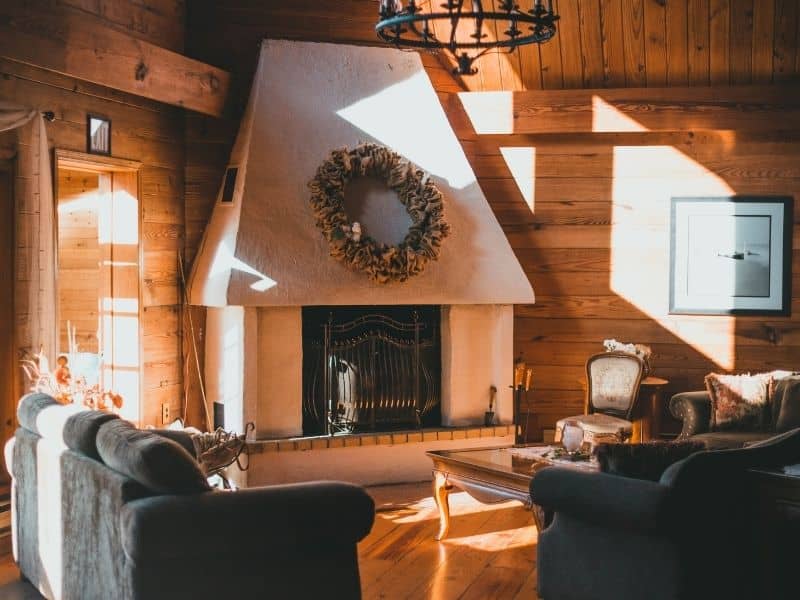
A corner fireplace can rescue a room that has no good wall left for one. It puts heat and a focal point into space that often sits empty, and it frees the long walls for windows, built-ins, or a TV. The tricky part is the hearth, because a stone hearth in a corner has to fit an angled opening, leave room to walk, and still meet your fireplace’s clearance needs.
The best corner layouts start with traffic and furniture, then shape the hearth to suit them. Get those two pieces right and the stone does the rest. This guide covers picking the corner, choosing a hearth shape, planning clearance, matching finishes, and installing stone that holds up for decades.
Choosing the Right Corner for Fireplace Placement
The right corner is one people can see from their main seats, with nothing crowding it. Stand where you’ll sit most often and look at each corner. A fireplace hidden behind a door swing or pushed into a dark back corner won’t get much use.
Before you commit, check door swings, nearby windows, and walking paths. Look at what sits above and below the corner, including joists, ductwork, and plumbing. Think about how the fireplace will relate to the TV wall, since the two often compete for attention.
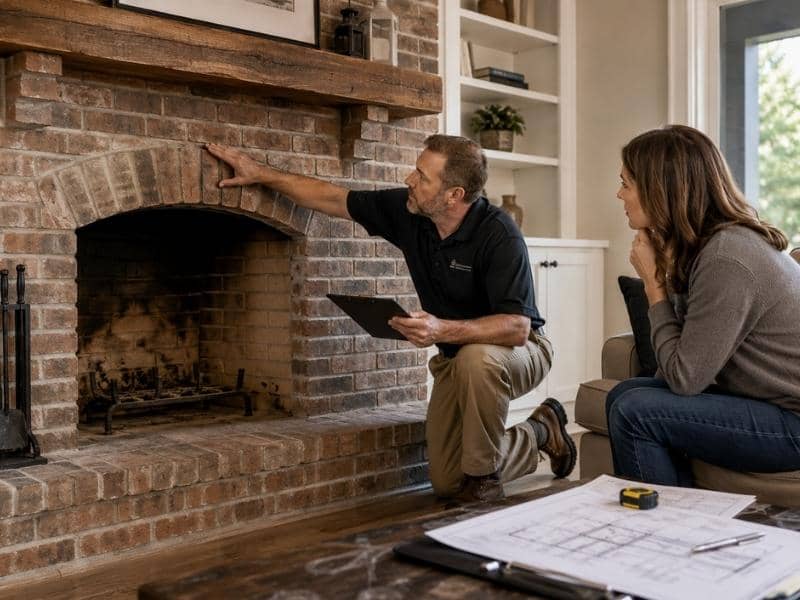
Exterior corners often make venting simpler, though they can mean more work where the chimney or vent exits. Interior corners keep heat inside the home, but routing a flue through upper floors can get complicated. Have a mason or fireplace installer look at the framing early, since a stone hearth puts real weight on one spot.
Stone Hearth Shapes That Fit Different Corner Layouts
The hearth shape should follow how the fireplace faces the room. Most corner units sit at an angle, so the hearth has to wrap that angle without looking cramped. Three shapes cover most corner layouts.
This shape mirrors the diagonal face of the firebox. The front edge runs parallel to the opening and the sides angle back to each wall. It’s the most common choice because it keeps the stone extension even and looks balanced from most seats.
A curved front edge softens the corner and makes walking past easier. Nobody catches a shin on a rounded edge. Curves take more cutting, so expect fabrication cost to run higher than a straight-edged hearth.
Some homeowners run the stone across the full corner as a raised bench. It adds seating and a spot to stack firewood. This works best in larger rooms, because a deep platform can swallow a small corner fast.
Slab stone like granite or bluestone gives a clean, single-piece look. Fieldstone or cut stone set in mortar suits rustic rooms and ties into existing stone masonry on the surround. Neither is always better, and the right pick depends on style, budget, upkeep, and the fireplace face.
Planning Furniture Clearance and Walkways Around the Fireplace
Leave enough open floor for people to walk past the hearth without stepping on it or bumping furniture. Many designers aim for a walking path of about 30 to 36 inches. Anything tighter makes the corner feel like an obstacle.
Furniture also needs space from the heat. Your fireplace manufacturer lists clearances to combustible materials, and those numbers apply to rugs, chairs, and side tables as well as trim. Angling seating toward the corner usually works better than lining it up against the walls.
Raised hearths need extra thought. A hearth near bench height is easy to see, but a low edge only a few inches tall is a trip hazard in a walkway. Keep it flush with the floor or build it high enough that people notice it.
Coordinating Hearth Height, Flooring, and Wall Finishes
Hearth height should match how the room gets used. A flush hearth suits busy rooms and homes with small kids or older adults. A raised hearth, often 12 to 20 inches tall, brings the fire closer to eye level and doubles as seating.
The flooring transition is where many corner hearths look unfinished. Wood floors expand and shrink with humidity, so the joint between wood and stone needs a small gap hidden by trim or a reveal. Tile can meet stone more directly, but the two heights still have to line up cleanly.
Plan the wall finish from the start. A stone hearth looks best when its color and texture relate to the surround, mantel, and nearby walls. If the home already has brick masonry or a stone fireplace elsewhere, bring a sample to the stone yard, because matching tone is far easier before anything is cut.
Stone Hearth Installation Details for Safety and Long-Term Durability
A stone hearth is only as good as what it sits on. The floor has to carry the weight without flexing, or joints will crack and stones can loosen. On wood-framed floors, that may mean added blocking or a reinforced subfloor, depending on hearth size and the existing structure.
The hearth extension in front of the firebox protects the floor from embers and heat. Its required size depends on the fireplace type, opening size, manufacturer instructions, and local code. Your installer and building department set the final numbers, so confirm them before any stone is cut.
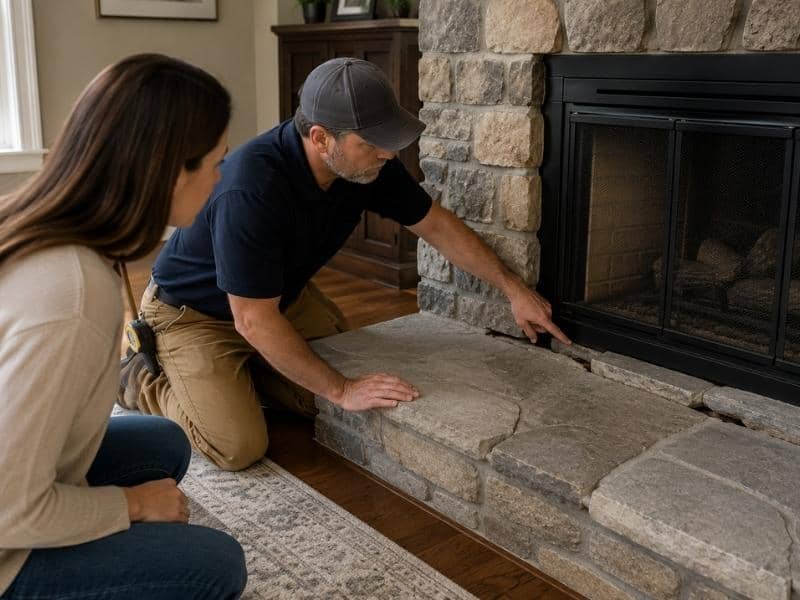
Durability comes down to a flat setting bed with no hollow spots, mortar or adhesive rated for heat near the firebox, and fully filled joints that cure before the first fire. Porous stone also benefits from a penetrating sealer to resist soot. Watch for hairline cracks or gaps where the hearth meets the firebox, since small repairs cost far less than resetting a whole hearth.
Frequently Asked Questions
Does a corner fireplace need a special stone hearth?
The stone itself doesn’t need to be special, but the shape usually differs from a flat-wall layout. Most corner hearths are angled or curved to follow the firebox. The front extension still has to meet manufacturer specs and local code. A mason can template the corner so the stone fits both walls cleanly.
Is a raised or flush hearth better for a corner fireplace?
Neither is always better. A flush hearth keeps walkways clear in tight or busy rooms. A raised hearth adds seating and lifts the fire into view in larger spaces. Room size and household needs should guide the choice.
What stone works best for a hearth?
Granite, slate, bluestone, limestone, and fieldstone are all common choices. Dense stones like granite resist stains and heat marks well. Softer stones offer great texture but usually need sealing. Matching the stone to existing masonry helps the room look planned.
Can I add a stone hearth to an existing corner fireplace?
In many cases, yes. A mason will check the floor structure, current hearth, and required clearances first. Some older hearths can be covered or extended, while others need to come out. The fireplace’s condition decides which path makes sense.
How do I keep a stone hearth looking good?
Sweep ash and soot often so it doesn’t grind into the surface. Clean with a pH-neutral stone cleaner instead of harsh products. Reseal porous stone when water stops beading on top. Call a mason if you spot loose stone or cracked joints.