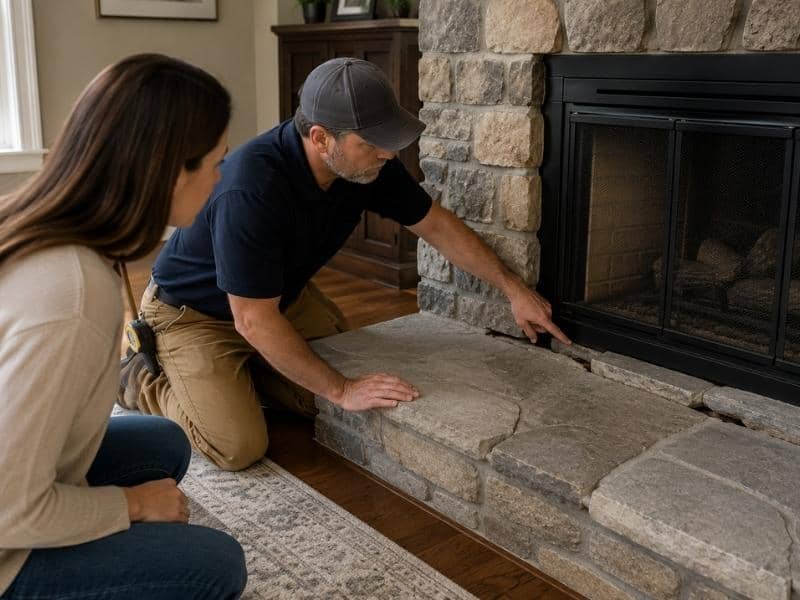
A stone hearth adds warmth and character to a home, but it can hide real damage under its surface. Before you close on a house, this area near the fireplace deserves a careful look. Small cracks or loose stones today can turn into a bigger, pricier repair later.
Buyers often focus on the big rooms and skip the fireplace details. That is a mistake worth avoiding, since hearth repairs can involve heat safety and structural support. A short inspection now can save you from a surprise after you move in.
Common Stone Hearth Problems That Signal Repair Needs
A close look at the hearth can reveal several early warning signs. Some are easy to spot, while others hide in the corners and joints. Learning what to watch for helps you judge the shape it is in.
Common problems to check for include:
- Cracked or crumbling mortar between the stones
- Loose or shifting pieces that move when touched
- Chipped edges and uneven surfaces
- Stains that will not wipe away
- Gaps where the hearth meets the stone fireplace may indicate structural movement, settling, or normal wear that should be inspected.
Any of these can point to wear, a poor original install or past moisture. A single small chip may be harmless. Several signs together often mean a mason should take a closer look before you buy.
Signs Moisture or Structural Movement Has Affected the Stone Hearth
Some damage runs deeper than a surface flaw. Dark stains, white mineral deposits or crumbling mortar can all hint at moisture working its way in. Cracks that keep widening, or a hearth pulling away from the floor, may point to movement below.
These clues matter because they tend to get worse over time. A stain today can become a loose section next year if water keeps seeping in. Looking past the surface helps you tell a cosmetic mark from a problem that will grow.
Stone Hearth Safety Concerns Around the Fireplace
A damaged hearth can create real hazards, not just ugly marks. Loose stone or a raised, uneven section can trip someone walking by. Deep cracks or broken joints can let heat reach materials that should stay protected.
Anything tied to fire safety deserves attention before you use the fireplace. The size of the hearth, its stability and its ability to resist heat all play a part. A careful check of these points helps keep the home safe once the fires start.
When Stone Hearth Damage May Influence Purchase Negotiations
Repair needs can shape the way a buyer responds during a sale. A clear list of problems gives you something solid to bring to the table. You might request a repair, adjust your offer or set new terms based on what you find.
A good repair estimate makes those talks much easier. It helps you tell minor cosmetic work from a larger masonry job. With real numbers in hand, you can decide how much a fix is worth to you.
Why a Mason Should Inspect a Stone Hearth Before Closing
An experienced mason sees things a quick glance will miss. They can judge the condition of the stone, the mortar joints and the support built beneath the hearth. They also check how well the hearth connects to the fireplace itself.
This kind of review leads to a clearer plan. A mason can estimate the scope, the cost and the urgency of any repair. Having that picture before closing lets you buy with your eyes open.
Frequently Asked Questions
What Causes Cracks in a Stone Hearth?
Cracks can come from settling, heat, moisture, a hard impact or weak mortar. The place and shape of a crack often hint at the cause. A thin surface line usually means less than a wide, deepening split.
Can a Damaged Stone Hearth Be Repaired Instead of Replaced?
Often, yes. A mason can repoint the mortar, reset loose stones or fill smaller cracks. Full replacement comes into play when the hearth is unstable, badly worn or poorly supported.
Is Stone Hearth Damage Always a Safety Concern?
No. A small chip or a light surface crack may pose no real danger. Loose pieces, deep cracks or heat-related damage are the ones that should be checked before the fireplace runs.
Should Buyers Have a Stone Hearth Inspected Before Purchasing a Home?
It is a wise step, especially when you see cracks, loose stones or staining. A masonry check explains the true condition of the hearth. It also shows what repairs might wait for you after the sale.
