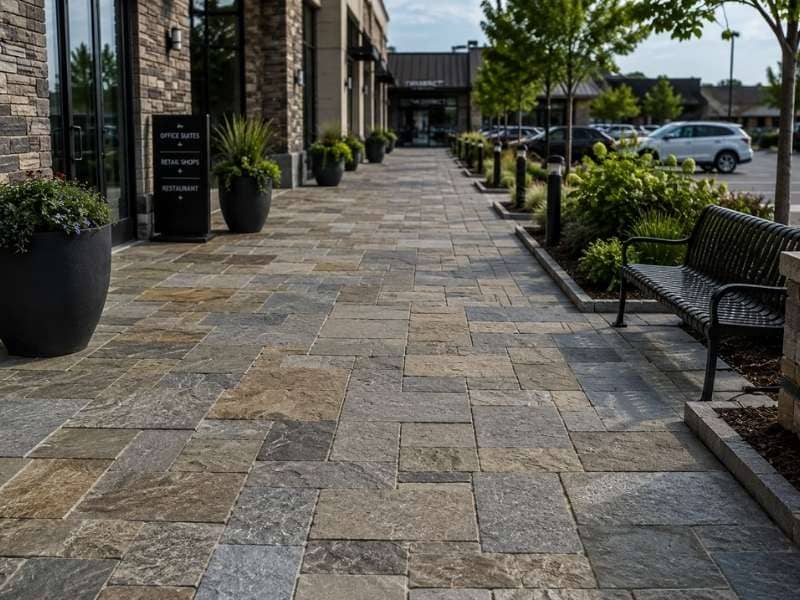
Commercial walkways experience constant foot traffic and must withstand years of daily use while maintaining a professional appearance. Stone pavers are a durable paving option that can provide long-term performance when properly selected and installed. Their modular design also makes individual repairs easier if damage occurs. For commercial properties, choosing the right paver material and building a properly prepared base are important steps in creating walkways that remain functional, attractive, and easier to maintain over time.
Why Stone Pavers Suit Commercial Walkways
Stone pavers handle heavy use better than many surfaces. Each paver is a solid unit, so the path spreads weight across many small pieces instead of one large slab. When concrete cracks, you see a long ugly line and often have to replace a whole section. When a paver cracks, you swap out that single unit. That difference matters on a busy commercial site where downtime and repairs cost money.
Pavers also flex with the ground. Soil shifts with weather and time, and a rigid slab fights that movement until it cracks. A paver surface moves a little without failing, since the joints between units absorb small shifts. This keeps a walkway smooth and safe longer, which cuts down on both repairs and trip hazards. Fewer trip hazards also means fewer complaints and fewer liability worries for a property owner.
Choosing the Right Stone for Traffic
Not every stone stands up to constant foot traffic, so the choice matters. Harder, denser stones resist wear and hold their surface under heavy use. Softer stones can wear smooth or chip faster in a commercial setting, which shortens the life of the path. Picking a stone rated for the traffic you expect is the first durability decision, and it’s worth getting right.
Surface texture counts too. A walkway needs enough grip to stay safe when wet, especially where the public walks. Very smooth stone can turn slick in rain, which is a real hazard on a commercial route. A stone with some natural texture, or a finish that adds grip, keeps footing sure in all weather. Matching the stone to the job protects both the path and the people on it, and a safe surface is part of what durability really means.
The Base Is Where Durability Lives
The strongest pavers fail on a weak base, so the ground prep is where a walkway is won or lost. A commercial paver path needs a deep, well-compacted base of crushed stone under it. This base carries the load and lets water drain away. Skimp on it and the surface will sink, shift and heave no matter how good the pavers are. Most failed paver paths trace back to a base that was too thin or poorly compacted.
Drainage is part of the base too. Water that sits under pavers softens the ground and pushes them out of place, especially through freeze and thaw. A proper base sheds water and holds its shape season after season. Edge restraints then lock the pavers in from the sides so the path doesn’t spread over time. Get the base right and the surface lasts for decades. Get it wrong and no surface repair will save it.
Meeting Commercial Standards and Access Rules
Commercial walkways answer to rules that home paths don’t. Public routes usually have to meet accessibility standards, which set limits on surface smoothness, gaps and slope. Pavers can meet these rules, but only if they’re chosen and laid with the standards in mind. Wide joints or uneven units can fail an accessibility check and force a costly redo.
Slope and surface evenness carry the most weight here. A walkway has to drain without being too steep, and it has to stay flat enough for wheels and canes. A person using a wheelchair or a cane needs a firm, even path with no lip to catch on. Planning for these limits during design avoids a failed inspection or an expensive rebuild. A paver walkway that meets the rules serves everyone and keeps the property clear of complaints and legal trouble.
Keeping a Paver Walkway Looking Good
A paver walkway needs some care to stay sharp, but the upkeep is simple. Sweeping and the occasional rinse keep dirt from grinding into the surface. Joint sand may need topping up over the years to keep the pavers locked together. These small tasks cost little and add years of life to the path.
Repairs are where pavers shine. When a unit stains or cracks, you lift it and set a new one, and the fix disappears into the path. There’s no patch that never quite matches, which is the usual result with concrete. This easy repair keeps a commercial walkway looking clean and cared for long after other surfaces would show their age. A property that looks maintained sends a message to tenants and customers, and pavers make that easy to keep up.
Weighing Cost Against Long-Term Value
Stone pavers cost more up front than poured concrete, and that gap is worth understanding. The higher price buys a surface that lasts longer, repairs cheaper and looks better for its whole life. On a commercial property held for years, those savings often close the gap and then some. The real comparison isn’t the install price. It’s the total cost over the life of the walkway.
Downtime is part of that math too. Replacing a cracked concrete section means closing off the area, breaking out the old slab and pouring new, then waiting for it to cure. Swapping a paver takes minutes and keeps the path open. For a business that depends on foot traffic, keeping walkways usable has real value. When you count durability, repair ease and appearance together, pavers earn their price on a commercial site.
