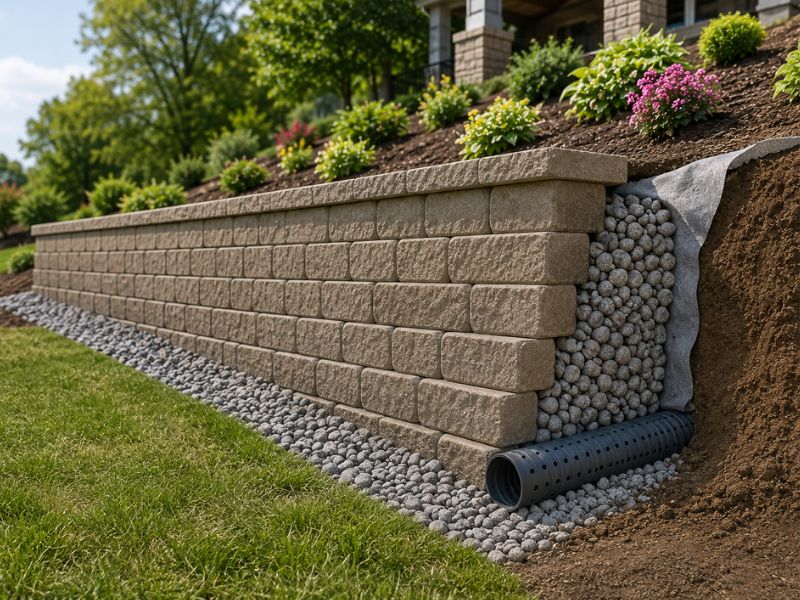
Water is the number one reason a retaining wall fails. Even a well-built wall can lean, crack, or slide once water starts building up behind it, and that risk climbs on a slope where rain runs downhill and presses against the soil. So before you build a retaining wall, you need a solid plan for where all that water will go. Good drainage is what keeps the wall standing straight for years instead of months. Here are the main things smart homeowners should think through before the first block goes down.
Send Hillside Runoff Away Before It Hits the Wall
Rain running down a slope carries real force, and when it reaches the soil behind your wall, that soil grows heavy and waterlogged. Saturated soil pushes hard against the structure, and that constant pressure is what breaks walls over time. The smartest approach is to stop the water before it reaches the back of the wall.
You have several simple tools for this. A swale is a shallow dip that guides water off to the side, while a berm is a small raised mound that blocks the flow and steers it away. Careful grading shapes the ground so rainwater travels around the wall instead of into it, and a surface drain can capture runoff near the top of the slope.
None of these features expect the wall to handle everything alone. The wall’s internal drain still plays a role, but it should only deal with whatever water slips past your first line of defense. When you reduce how much water reaches the soil, the entire system holds up far longer.
Build a Free-Draining Layer Behind the Wall
Behind every well-designed retaining wall sits a column of clean drainage stone. This is not ordinary dirt or fine sand, but washed rock with plenty of open space between each piece, so water moves through it quickly and drops toward the base.
That open stone gives water a fast, direct path to the bottom of the wall. Without it, moisture lingers in the soil and presses steadily against the blocks, and over time that pressure can bow the wall outward or crack the masonry units. Think of the stone as a dedicated fast lane that keeps water from pooling against the structure.
Many builders wrap this stone zone in filter fabric for extra protection. The fabric prevents fine soil particles from washing into the rock and clogging the gaps that let water escape. As a result, the drainage layer keeps working properly for years rather than slowly filling with silt.
Place the Drainpipe Low on a Sloped Yard
A perforated pipe usually runs along the base of the wall, and this is known as a toe drain. Perforated simply means the pipe is lined with small holes that let water seep inside. Because water collects at the lowest point, the pipe must sit low enough to catch it, since a pipe placed too high leaves water pooling underneath where pressure keeps building.
On a slope, the type of soil changes how carefully you have to plan. Poorly draining soil such as heavy clay holds onto water and demands extra attention, while tall walls and reinforced walls carry heavier loads that often call for a fully designed system. In those situations, a professional should map out both the pipe layout and its depth.
Getting the pipe height correct is not something to eyeball. Even a few inches too high can quietly undo the entire drainage plan, so this is a step worth slowing down for. A little care now can save you from an expensive rebuild later.
Give the Water a Safe Way Out Downhill
A drainpipe only earns its keep when the water it collects has somewhere useful to go. Ideally the pipe leads to a lower spot on the property, a stormwater system, or another approved outlet that can handle the flow. If it simply ends in the same soil it was draining, you have relocated the problem rather than fixing it.
You also need to protect wherever that water comes out. Erosion can wear away the ground around the outlet, while leaves, mulch, and dirt can clog the opening, and animals sometimes build nests inside an open pipe. A simple grate or screen goes a long way toward keeping everything clear.
Landscaping work is another threat that people often overlook. A crew planting shrubs might bury or crush the outlet without ever realizing it was there. Marking the spot and checking on it once in a while keeps the whole system flowing.
Handle Water Between Stacked Walls
Some yards rely on two or more walls stacked up the slope, and these tiered walls end up sharing their water. Rain landing on the upper level runs down toward the level below it, so ignoring that flow puts real strain on the lower wall.
Each tier deserves its own plan for catching and moving water. Runoff from the upper terrace should be intercepted and redirected before it reaches the next wall down, and a swale or drain set between the levels handles this nicely. The main goal is to keep the soil separating the tiers from turning into saturated mud.
When that middle soil soaks through, both walls feel the added weight and pressure. The lower wall tends to fail first because it carries the greatest load. Planning each level as its own drainage system spreads the risk instead of piling it onto a single wall.
Frequently Asked Questions
Does every hillside retaining wall need a drainpipe?
Not every small wall relies on the same drainage setup. Even so, walls built on slopes, walls sitting in poorly draining soil, and reinforced walls usually need extra help with water. Many walls taller than four feet also call for a toe drain or a professionally designed drainage plan. When you are unsure, a qualified professional can tell you what your particular site requires.
Can surface grading replace drainage behind the wall?
No, because the two systems handle different jobs. Surface grading steers rainwater away before it soaks into the retained soil, while the drainage layer and pipe manage whatever water still reaches the wall. The two work best as a team, so leaving one out creates a weak point. Relying on grading alone usually means water builds up where you cannot see it.
Where should retaining wall drainage water discharge?
The outlet should lead to a safe, lower area of the property or an approved point designed to receive the flow. A stormwater connection often works well for this purpose. The key rule is that the discharged water should never cause erosion or flooding somewhere else. A good outlet solves your problem without quietly creating one for a neighbor.
Why is filter fabric used in retaining wall drainage?
Filter fabric keeps fine soil separated from the clean drainage stone behind the wall. Without it, tiny dirt particles wash into the rock and clog the open spaces that let water pass. Once those gaps fill in, the stone can no longer move water quickly. The fabric preserves that clear drainage path for the long haul.
Should downspouts empty behind a hillside retaining wall?
No, roof water should never be dumped directly behind the wall. A downspout delivers a large, concentrated rush of water into one spot, and that surge saturates the retained soil almost instantly. Instead, route the roof runoff well away from the wall toward a safe area. Every concentrated water source deserves a place in your overall drainage plan.
