
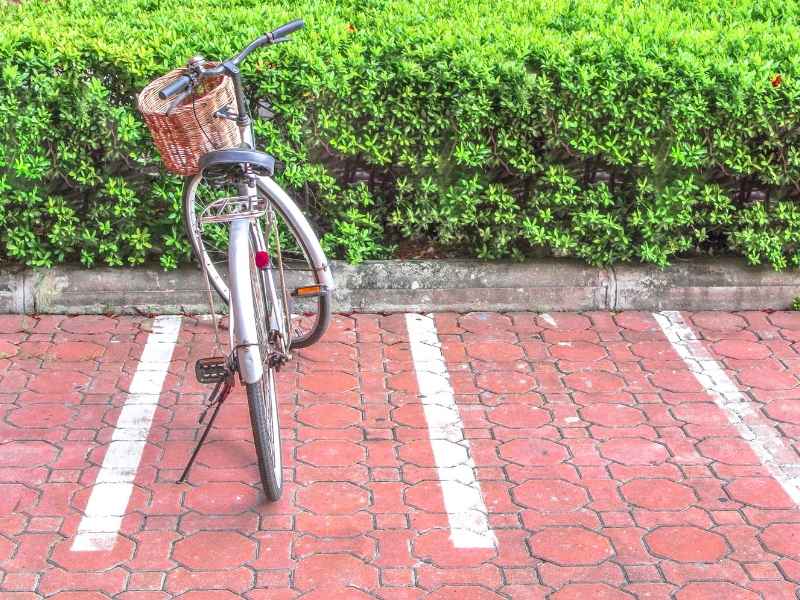
Brick pavers can handle that kind of use and still look good next to a building, as long as the layout, base, and rack anchors are planned together. Bike racks take more abuse than most people expect. Kickstands dig in, tires grind grit into the joints, and riders lean bikes against anything nearby once the rack fills up.
This guide is for property owners and managers adding bike parking at apartments, offices, shops, schools, and similar sites, with homeowners who want a dedicated bike pad in mind too. The main takeaway is simple. Decide where riders will actually park, plan the rack anchors before the base goes in, and handle drainage before a single paver goes down.
Planning Bicycle Rack Placement and Paved Access Areas
Good bike parking sits where riders already want to go. Racks tucked behind a building or far from the entrance tend to sit empty while bikes get locked to railings and trees. Place the rack area near a main door, along a natural walking path, and in plain view, which also helps with security.
Size the paved area for parked bikes plus room to move around them. A rack takes up little space, but a full row of bikes and riders maneuvering in and out needs far more. Planning guidance from groups like the Association of Pedestrian and Bicycle Professionals covers spacing and clearances, and some localities have their own rules for commercial sites. Confirm any requirements with your designer or local office before setting the layout.
Think about how the pad connects to the rest of the property. A bike area that ties into an existing walkway, entry plaza, or brick patio feels intentional and keeps riders off the lawn. Keep the access path wide enough for someone walking a bike beside them, and avoid steps between the street and the rack.
Selecting Brick Pavers for Bicycle Parking Surfaces
Clay paving brick is fired to handle foot traffic and, in heavier grades, vehicles. It’s a different product from wall brick, which isn’t made to lie flat and take wear on its face. For bike parking, choose a paver rated for at least pedestrian and light traffic, and consider a heavier-duty unit if maintenance carts or vehicles cross the area.
Pattern matters as much as the unit. A herringbone pattern locks pavers together and resists the twisting forces from tires and kickstands better than a simple running bond. A tight, flat surface with small edge chamfers also gives tires a smoother roll.
Stone pavers are an option too, especially where they match existing stone masonry on the building. The choice comes down to appearance, traffic, maintenance, budget, and how well the material fits what’s already on site. Some natural stones get slick when wet, so ask about texture and slip resistance before you commit.
Preparing a Stable Base for Brick Pavers and Bicycle Rack Anchors
The base is what keeps a paved bike area flat for years. A typical paver installation uses a compacted layer of crushed aggregate, a thin bedding layer of sand, and edge restraints that keep the pavers from creeping outward. Base depth depends on soil conditions, drainage, and expected traffic, so have your contractor explain what they plan to use and why.
Rack anchors need their own plan. Pavers alone can’t hold a rack steady, since bolts set into individual units loosen as bikes get pushed and pulled against the rack. Most installations anchor racks to concrete footings or a concrete pad below the paver surface, with the pavers cut neatly around the rack legs.
Set the rack locations before base work starts. Pouring footings first and paving around them is far easier than cutting out finished pavers later. Ask for the rack manufacturer’s anchoring instructions so the footing size and bolt pattern match the product you’re buying.
Managing Surface Drainage and Transitions Around Bicycle Parking
Water that sits around a bike rack turns into mud, rust stains, and soft spots in the base. Slope the paved area so water runs off the pad and away from buildings, and make sure it won’t drain toward a doorway or the base of a retaining wall. On flat sites the grading needs extra attention, because small low spots show up fast.
Permeable pavers are another option. They let water pass through wider joints into a specially built base below, which can reduce runoff on some sites. That system needs the right soil and design, so it isn’t a fit everywhere.
Transitions deserve as much care as the pad itself. Where pavers meet a concrete sidewalk, an asphalt lot, or an existing brick patio, the surfaces should sit flush so riders and pedestrians don’t catch a wheel or a toe. If the bike area is part of an accessible route, slope and surface requirements may apply, depending on the property and local rules.
Maintaining Brick Pavers in High-Traffic Bicycle Parking Areas
Busy bike parking needs a simple, regular routine. Sweep the area to keep grit out of the joints, since sand and debris ground in by tires wear down paver edges over time. Refill joint sand when it drops below the paver surface, because loose pavers usually start with empty joints.
A quick inspection a few times a year catches small problems before they spread. Spring and fall are convenient times to do it. Look for:
- Brick pavers that have settled or lifted near rack legs
- Rack anchors that have loosened or rusted
- Low spots where water sits after rain
- Chipped edges at transitions or along the border
- Rust or oil stains that need cleaning
Settled pavers can usually be lifted, the base topped off, and the same units reset. A loose rack is a bigger issue, since it often means the footing or anchor has failed. Call your masonry contractor before a wobbly rack pulls up the pavers around it.
Frequently Asked Questions
Can a bike rack be bolted directly to brick pavers?
That isn’t a good long-term approach. Individual pavers move slightly under load, and bolts set into them tend to loosen as bikes get pulled against the rack. Most contractors anchor racks to concrete footings or a pad beneath the paving. The pavers are then cut to fit cleanly around the rack legs.
Will kickstands damage a brick pavers surface?
Kickstands can leave marks and push into joints, especially on soft or uneven surfaces. A well-compacted base, full joints, and a tight paving pattern help the surface resist that wear. Racks that support bikes without kickstands also reduce the problem. Durable clay pavers hold up well to this kind of use.
Is brick or stone better for bike parking?
Neither material is the right choice for every site. Brick offers consistent sizes and a classic look, while stone can match existing stone masonry on the building. The decision comes down to appearance, traffic, slip resistance, maintenance, and budget. A masonry contractor can show you samples of both in similar settings.
