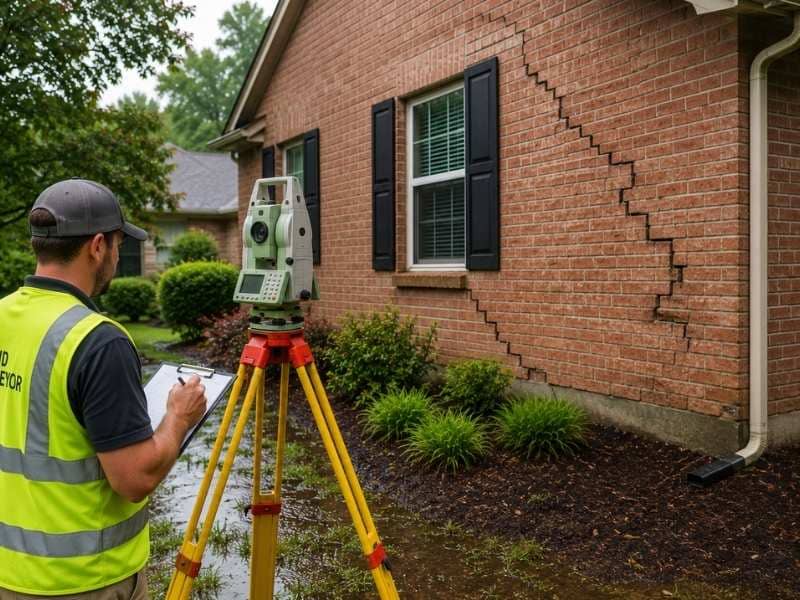
Summer heat and heavy rain don’t just make yards muddy. They can stress the structure of a home in ways that aren’t obvious until the season ends. One of the most common signs is brick masonry cracks. They seem to appear out of nowhere, but the conditions that cause them build up slowly over weeks of wet heat. Understanding why brick masonry cracks form after a hot, wet summer makes it easier to catch problems early and know when to act.
How Clay Soil Affects Brick Masonry After Heavy Summer Rain
Many homes sit on clay-heavy soil. Clay behaves differently from other soil types because it changes size depending on how much water it holds. When rain soaks into clay soil, it swells. When dry heat follows, it shrinks back down. This back-and-forth happens repeatedly through a wet summer.
That movement puts stress on everything above it, including the foundation and the brick masonry attached to it. When the ground shifts even slightly, the structure above shifts too. Brick is strong but not flexible. Under repeated stress from soil movement, small cracks form in the mortar joints or across the face of the brick itself.
Why Hot Weather and Extra Moisture Can Stress Brick Masonry
A hot, wet summer creates conditions that work against brick masonry in two ways at once. Heat causes building materials to expand. Moisture works into small gaps and softens mortar over time. When both happen together and then reverse, the cycle puts constant pressure on the wall.
After a stretch of heavy rain followed by dry heat, mortar joints that were already slightly weak can crack open further. Bricks that absorbed moisture and then dried out quickly are more likely to show surface damage. Cracks that were too small to notice in spring can become visible by late summer because the wet-dry cycle has widened them. This is why many homeowners notice new cracks right after the hottest and wettest part of the year.
Signs That Brick Masonry Cracks Are Getting Worse
Not every crack in brick masonry needs immediate attention. But some signs point to a problem that’s growing and shouldn’t wait.
Watch for cracks that are wider than they were before, especially ones that now have a visible gap rather than a hairline split. Gaps in mortar joints, where the mortar has crumbled or pulled away from the brick, are another sign that water and movement have done real damage. If doors or windows near an exterior brick wall start sticking or won’t close smoothly, that can mean the wall or frame has shifted. Cracks that run diagonally from the corners of windows or doors are worth taking seriously. They often point to foundation movement rather than surface damage alone.
How Poor Drainage Around a Home Can Affect Brick Masonry
Water that sits near a home’s foundation keeps the soil wet long after rain stops. Gutters that overflow because of clogs dump large amounts of water right along the base of the home. Downspouts that are too short deposit water only a foot or two away from the foundation instead of directing it away from the structure. Low spots in the yard that collect standing water keep the soil saturated in those areas.
All of that extra moisture makes the soil movement worse. Clay soil that stays wet longer swells more and for longer periods. When it dries, it pulls back more sharply. The more extreme that cycle is, the more stress it puts on the brick masonry above. Keeping water away from the base of the home is one of the most direct ways to reduce that stress.
When to Have Brick Masonry Cracks Checked by a Masonry Expert
Small cracks that stay the same size and appear in only one spot may not require immediate repair. But some situations call for a professional look sooner rather than later.
If cracks keep coming back after being patched, the underlying cause hasn’t been fixed. If a crack has grown noticeably wider over a single season, the movement driving it is still active. If multiple cracks appear at the same time, especially after a wet summer, that pattern often points to soil movement or drainage problems rather than normal settling. A masonry expert can identify whether cracks are cosmetic or structural, find the source of the movement, and recommend repairs that address the cause rather than just the surface.
Frequently Asked Questions
Why do brick masonry cracks show up after a hot, wet summer?
Heavy rain and high heat cause soil and building materials to expand and contract. That repeated movement puts stress on brick masonry and can make existing cracks more visible or cause new ones to form.
Does clay soil cause brick masonry cracks?
Yes. Clay soil swells when wet and shrinks when dry. That movement shifts the ground beneath a home’s foundation, which puts pressure on brick masonry and can lead to cracking over time.
Can water around the house damage brick masonry?
Too much water near the foundation keeps clay soil swollen longer and causes more dramatic shrinkage when it dries out. Over time, that cycle increases stress on brick masonry and raises the risk of cracking.
How can I tell if a brick masonry crack is getting worse?
Look for cracks that are wider than before, gaps where mortar has crumbled away, or doors and windows near the wall that stick or don’t close properly. These signs suggest the movement causing the crack is still active.
Should I have brick masonry cracks inspected?
Yes, especially if cracks keep returning, have grown wider over a single season, or appear alongside other signs of movement. A masonry professional can find the cause and recommend repairs that fix the problem at its source.
