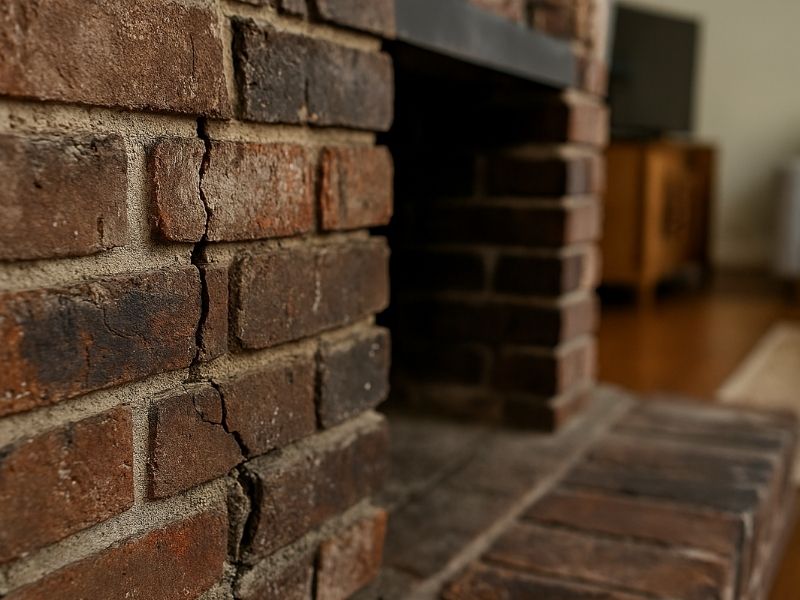
Brick walls look solid. That’s part of why water damage catches so many homeowners off guard. The wall seems fine right up until it doesn’t, and by that point the damage has usually been building for years. In Auburn, Alabama, where heavy rain and humid summers are the norm, brick walls take a beating that shows up slowly and costs a lot when it finally gets attention.
Early Signs of Water Damage in Brick Walls
The first signs are easy to miss if you’re not looking for them.
White powder or streaking on the brick surface is called efflorescence. It happens when water moves through the wall and pulls mineral salts to the surface. It looks like a cosmetic problem, but it tells you water is actively moving through the masonry.
Mortar that crumbles when you drag a key across it is another early warning. Healthy mortar feels hard. Damaged mortar feels sandy or comes off in small pieces. That’s not normal aging. That’s moisture doing its work.
Damp spots on interior walls near exterior brick, mold along baseboards, or peeling paint on the inside of an exterior wall all point to the same source. Water is getting through.
Brick faces that flake or split, called spalling, are more advanced. The surface layer of the brick is separating because water got in, expanded during temperature changes and pushed the face off. Once that starts, it spreads.
Catching any of these signs early keeps the repair bill manageable. Ignore them and you’re looking at section rebuilds instead of simple repointing.
How Moisture Gets Into Brick and Mortar
Brick is not waterproof. Most people assume it is. Clay brick is actually porous, and mortar joints are more porous than the brick itself. Water gets in through both.
The most common entry points:
- Cracked or missing mortar joints where the seal between bricks has failed
- Gutters that overflow or pull away from the fascia and dump water down the wall
- Sprinkler systems aimed too close to the foundation or wall base
- Low-lying soil that traps water against the wall rather than draining it away
- Gaps around windows, doors and where brick meets other materials
Heavy rain alone isn’t always the problem. Chronic low-level exposure is often worse. A sprinkler that hits the same wall section every day for years, or a downspout that drains two feet from the foundation, will cause more cumulative damage than a single storm.
In Auburn’s climate, the combination of summer rain, humidity and warm temperatures creates ideal conditions for moisture to work its way deep into masonry before the surface ever looks wet.
Problems That Can Develop When Water Damage Is Ignored
The damage doesn’t stop on its own.
Once moisture gets past the mortar joints, it starts working on the brick itself. The brick absorbs water, and that water carries minerals that weaken the internal structure over time. Freeze-thaw cycles, which Auburn does see occasionally in winter, accelerate this process fast. Water expands when it freezes. That expansion puts pressure on brick from the inside.
Loose bricks are a structural concern, not just a cosmetic one. A brick that’s no longer bonded to its neighbors by solid mortar is held in place mostly by weight and friction. That’s not a long-term solution.
Interior leaks follow. Water that gets through the outer wythe of brick can reach the interior wall cavity, insulation and framing. Once wood framing gets wet repeatedly, mold and rot follow. That’s when a masonry repair job turns into a much larger renovation.
Mold on interior walls is sometimes the first sign a homeowner notices because the exterior wall showed no obvious damage. By the time mold is visible inside, moisture infiltration has been happening for a while.
The repair cost curve is steep. A repointing job on a damaged section might cost a few hundred dollars. A section rebuild with interior repairs behind it can run several thousand. The gap between those two numbers is mostly time.
Why Proper Drainage Helps Protect Brick Walls
Controlling water around the house protects the masonry better than any sealer on the market.
Gutters need to be clean and intact. A clogged gutter overflows and sends water sheeting down the wall face repeatedly through every rain event. That’s direct, sustained exposure to the most vulnerable part of the wall, which is the mortar joint at the top of the course nearest the roofline.
Downspouts need to extend far enough from the foundation. The standard recommendation is at least six feet of clearance. A downspout that drains right at the foundation keeps the base of the wall wet through every rainstorm.
Grading matters. Soil that slopes toward the house directs surface runoff straight to the foundation and the base of the wall. Proper grading slopes away from the structure at roughly one inch per foot for the first six feet.
Landscape choices close to the house affect drainage too. Dense shrubs pressed against brick trap moisture and reduce airflow, which slows drying after rain. Sprinklers aimed at or near the wall base cause the same problem on a daily schedule.
None of these fixes are complicated or expensive. But skipping them while spending money on brick sealer is like fixing the symptom and ignoring the source.
When Homeowners Should Consider Masonry Repairs
Some situations call for a professional assessment rather than a wait-and-see approach.
Widespread mortar deterioration across a large wall section needs professional repointing. This isn’t a one-joint touch-up. It’s systematic work across multiple courses, and the mortar type and mix need to match the original to avoid making the wall more brittle, not less.
Missing bricks or bricks with significant spalling need to be replaced and matched carefully. A brick with a split or missing face is no longer doing its job. Water enters faster, and the surrounding courses carry more stress.
Recurring moisture problems on interior walls, especially after multiple rain events, signal that the water is finding a path through the wall that surface inspection alone won’t identify. A mason who can assess the full wall assembly, not just the face, is the right person for that situation.
Stair-step cracking in the mortar joints, where cracks follow the diagonal pattern of the mortar rather than cutting through the brick, can indicate foundation movement or wall settlement. That goes beyond a standard repair and needs evaluation before any masonry work begins.
In Auburn, where soil movement from clay expansion is a known issue, stair-step cracking deserves attention rather than just cosmetic patching. Patching over active movement doesn’t fix anything and wastes the repair budget.
Frequently Asked Questions
What is the white powder on my brick walls?
The white substance is called efflorescence. It forms when water moves through brick or mortar and carries mineral salts to the surface. As the moisture evaporates, it leaves behind a white residue. Efflorescence is a sign that moisture is moving through the wall and should be investigated instead of simply cleaned away.
Can I waterproof brick walls myself?
Penetrating water repellents made for masonry are available and can help protect walls that are in good condition. However, sealers will not solve problems caused by damaged mortar or deteriorating brick. Existing issues should be repaired first so moisture does not become trapped inside the wall.
How long do brick walls last if water damage is addressed early?
Brick walls that are properly maintained and repaired when needed can last 100 years or more. Repointing mortar joints every 20 to 30 years is considered normal maintenance. Walls exposed to long-term moisture without repairs may deteriorate much faster and eventually require partial or complete rebuilding.
Does Auburn’s humidity make brick water damage worse?
Yes. Auburn’s humid climate can slow the drying process after rain or moisture exposure. Brick and mortar that remain damp for long periods are more likely to develop mold, mineral deposits, and other forms of deterioration than masonry in drier environments.
Is stair-step cracking always a serious problem?
Not always. Stair-step cracks in mortar joints may result from normal settling, but they can also indicate foundation movement. Minor cracks in older homes can often be repaired and monitored. Cracks that continue to widen or reappear after repairs should be evaluated to determine whether a more significant structural issue is present.
