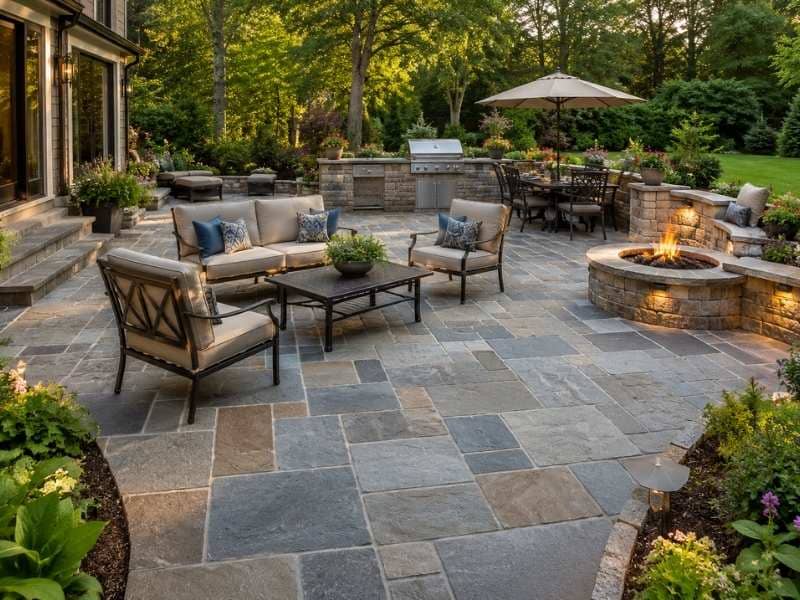
A stone patio can hold its looks for decades, but only when four things line up: the right stone, a simple design, a solid base and steady care. Miss one, and the patio starts to dip, stain or fade too soon. Get all four right, and it stays sharp for years with little fuss.
Choose the Best Stone for a Patio That Lasts
The stone you choose shapes how the whole patio wears. Dense, hard stones like granite and bluestone resist scratches, stains and fading the longest. Softer stones bring charm, but they need more care to stay looking good.
- Flagstone lays flat in natural, uneven shapes for a rustic look. It handles weather well, though its rough face traps dirt and needs regular sweeping.
- Bluestone has a smooth surface and a calm blue-gray color that barely shifts. It suits busy patios, since it wears slowly and wipes clean easily.
- Limestone feels warm and soft underfoot in pale tones. It stains more easily than the others, so a sealer helps, but it ages into a worn look many people love.
- Granite is the toughest of the group. It shrugs off scratches, heat and stains, and its color stays put for decades. The trade-off is a higher price.
Many people also compare natural stone with concrete pavers. Pavers cost less and install fast, but their color sits on the surface and fades with no way to restore it. Natural stone costs more, yet its color runs all the way through, so a chipped edge still blends in years later.
Design a Stone Patio That Ages Well
Good design comes down to keeping things simple. Clean lines, steady colors and a layout that fits the yard look right far longer than busy patterns or loud color mixes. Size matters as much as style. A patio that’s too big feels empty, while one that’s too small feels tight once you set out chairs, so plan around how you’ll really use the space.
Match the Patio to Your Home’s Other Stonework
A patio looks best when it feels tied to what’s already around it. If you have stone walkways, steps, a fireplace or a low wall nearby, pick patio stone that gets along with them. Nothing needs to match exactly, but the colors and textures should agree. Borrowing a color from an existing feature is an easy way to make the whole yard read as one plan.
Build a Solid Base Before the Stone Goes Down
The base decides how long a patio stays flat and even. Trade groups like the Interlocking Concrete Pavement Institute call for at least four inches of compacted crushed rock under a patio, and pros pack it in layers no thicker than four inches so it settles evenly. Skip that prep, and even good stone shifts within a few seasons. A gentle slope of about a quarter inch per foot sends water running off instead of pooling in the joints. Firm edges then hold the outer stones in place so the patio can’t spread apart. None of this shows in photos, yet it keeps the surface level for years.
Keep Your Stone Patio Looking New With Simple Care
Upkeep is easier than most people expect. A sweep every week or two keeps grit from grinding into the surface, and a quick rinse handles most dirt. Stay ahead of weeds by pulling small ones early or using a joint filler that blocks them. The joints themselves need attention once a year, since the sand between stones washes out and open joints let stones wander and weeds settle in. Spills call for quick action too, because oil or food soaks in deeper the longer it sits. Sealing depends on the stone: soft, porous types like limestone benefit from it, while dense stones like granite usually don’t.
Add Features That Make the Patio More Useful
The right add-ons turn a patio into a space you actually use. A low seating wall gives people a place to sit and doubles as a border, while a fire feature draws everyone in on cool evenings and stretches the seasons you’ll use the patio. An outdoor kitchen area helps if you cook outside often. Soft lights along the edges or steps let you enjoy the patio after dark, and planting beds soften the hard stone with color that changes through the year. A new patio pays off at resale too, returning close to 95 percent of its cost in the National Association of Realtors’ remodeling research.
Frequently Asked Questions
What is the most durable stone for a patio?
Granite is the toughest common choice, since it resists scratches, heat and heavy use while holding its color for years. Bluestone comes a close second and often costs less, which makes it a favorite for patios that get daily use.
How long does a stone patio usually last?
With a solid base and simple care, a stone patio can serve for decades. The stone usually outlasts the joints and the ground beneath it, so most repairs deal with the base rather than the surface.
Does a stone patio need sealing?
Only some stones do. Soft, porous types like limestone benefit from a sealer that blocks stains and water, while dense stones like granite usually get by without one.
How do you prevent weeds between patio stones?
Weed control starts in the joints. A tight joint filler that you refresh once a year leaves weeds little room to sprout, and pulling the few that appear while they’re small keeps their roots from loosening the stones.
Can a retaining wall improve a stone patio design?
Yes. A retaining wall holds back sloped ground so you can build a flat patio where the yard would otherwise fall away. Matching it to the patio stone ties the whole space together and adds another spot to sit.
