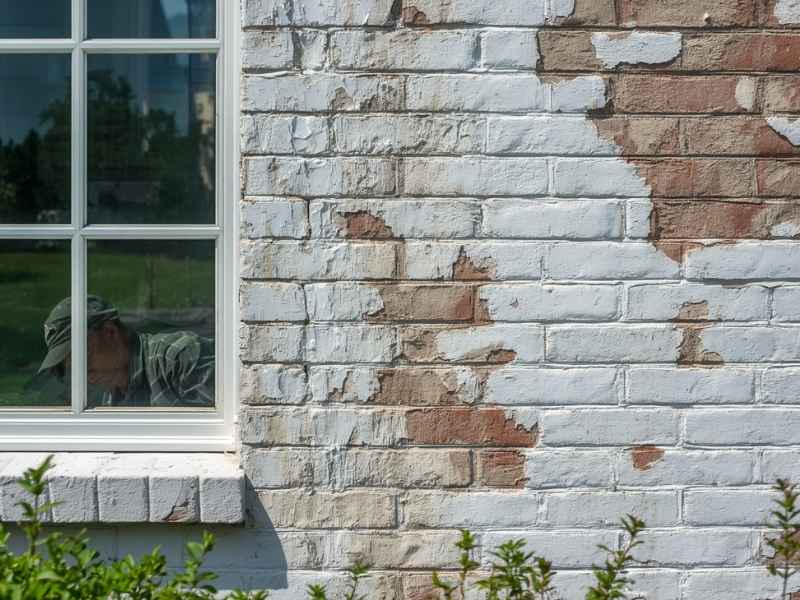
Painted brick looks fresh and clean the day it’s finished. A few years later, that same paint can peel, bubble, or trap moisture inside the wall. Before you recoat painted brick, it helps to understand what’s actually happening under that layer of color.
Auburn’s mix of hot, humid summers and heavy rain makes this an easy trap for homeowners to fall into. A quick coat of paint can hide a problem instead of fixing it.
Painted brick can trap moisture, peel, and hide underlying damage. Before recoating, check for trapped water, existing paint failure, and the brick’s original condition, or you risk locking in bigger problems.
Why Painted Brick Behaves Differently Than Bare Brick
Bare brick breathes. Water that gets into the brick during a rainstorm can slowly evaporate back out. Paint changes this. Most standard paints form a layer that blocks some of that natural movement.
This creates a tricky balance. Paint that’s too thick or the wrong type can trap water inside the brick instead of letting it escape. Over time, this trapped moisture becomes the root cause of many painted brick problems.
The Peeling Paint Problem Almost Everyone Sees Eventually
Peeling paint on brick is common, and it rarely means the paint job itself was bad. More often, it means water got trapped behind the paint and pushed its way back out.
Signs this is happening include:
- Paint bubbling or blistering, especially after a heavy rain
- Peeling that starts near the ground or near downspouts
- Flaking sections that reveal a chalky or damp surface underneath
Recoating over peeling paint without addressing the moisture source usually leads to the same problem showing up again within a year or two.
What’s Really Happening Under a Layer of Paint
Painted brick can hide issues that would be obvious on bare brick. Cracks, old repairs, and even minor structural shifts can get covered by a fresh coat without anyone noticing.
Before recoating, check for:
- Hairline cracks running through mortar joints, not just the brick itself
- Old patch jobs where mortar color or texture doesn’t match
- Soft or crumbling brick edges hidden just under the paint surface
A quick visual check from a few feet back often misses these details. Getting closer, or having a mason take a look, catches problems before they get sealed under new paint.
Why Moisture Trapped Behind Paint Causes Long-Term Damage
When water gets into brick and can’t escape through the surface, it looks for another way out. This often means pushing through weak points, cracking the brick face, or breaking the paint bond entirely.
This process, sometimes called spalling, can chip away at the brick’s outer layer over repeated freeze-thaw cycles or repeated wet-dry cycles. Auburn doesn’t see hard freezes often, but the wet-dry cycle alone is enough to cause slow damage over several years.
Checking for Trapped Moisture Before You Recoat
A simple check can save a lot of trouble later. Press your hand against the brick on a dry day, ideally after several days without rain.
Signs of trapped moisture include:
- A cool, damp feel to the brick surface
- A musty smell near the wall, especially indoors on the other side
- Visible white, powdery residue called efflorescence forming on or near the paint
If any of these show up, painting over the surface without solving the moisture issue first is likely to fail again.
Choosing the Right Product Matters More Than Most Homeowners Expect
Not all paint is designed for masonry. Standard latex paint made for wood or drywall doesn’t handle brick’s natural moisture movement well.
Masonry-specific paints and breathable coatings allow some vapor to escape while still protecting the surface. Using the wrong product is one of the most common reasons painted brick fails again within a short time.
Before choosing a product, ask:
- Is this coating rated specifically for masonry surfaces?
- Does it allow vapor transmission, or is it a solid, non-breathable barrier?
- What is the expected lifespan compared to standard exterior paint?
Prepping the Surface Properly Before Any Recoat
Skipping prep work is one of the fastest ways to guarantee an early paint failure. Proper prep usually includes:
- Removing any loose, peeling, or flaking paint completely
- Cleaning the surface to remove dirt, mildew, or efflorescence buildup
- Repairing any cracked mortar joints before applying new paint
- Allowing the brick to fully dry before any new coating goes on
Rushing this stage to save time almost always costs more later, once the new paint starts failing in the same spots as before.
When Painted Brick Should Be Left Alone Instead of Recoated
Sometimes the better move is stripping paint entirely rather than adding another layer. This makes sense when:
- The brick has failed multiple paint jobs in the same area
- There’s clear evidence of ongoing moisture problems that haven’t been fixed
- The underlying brick shows signs of spalling or crumbling
In these cases, a mason may recommend full paint removal and brick restoration instead of another coat that’s likely to fail again.
Questions to Ask Before Hiring Someone to Recoat Painted Brick
- Will you check for trapped moisture before applying any new paint?
- What specific product do you recommend for masonry, and why?
- How will you handle any cracked mortar or damaged brick found during prep?
- What is the expected lifespan of this coating compared to what’s currently on the wall?
- Do you recommend recoating, or does this wall need paint removal instead?
Frequently Asked Questions
Why does paint on brick peel more than paint on wood siding?
Brick absorbs and releases moisture differently than wood. When paint prevents that natural moisture movement, trapped water can force the paint to peel away from the surface.
Can I paint over brick that already has some peeling paint?
No. Applying new paint over peeling areas usually traps the same moisture problem underneath, causing the new coating to fail much sooner.
What is efflorescence, and does it affect painted brick?
Efflorescence is a white, powdery mineral deposit left behind when moisture moves through brick and evaporates. On painted brick, it often indicates trapped moisture that should be addressed before repainting.
How do I know if my painted brick has moisture trapped behind it?
Signs include damp or cool areas on the wall, a musty odor, bubbling or peeling paint, and white mineral deposits around cracks or edges. These are common indicators of excess moisture behind the paint.
Is it better to strip painted brick completely instead of recoating it?
It depends on the condition of the brick. If multiple paint layers have failed or the wall shows signs of moisture damage or deteriorating masonry, removing the paint completely is often the better long-term solution.
