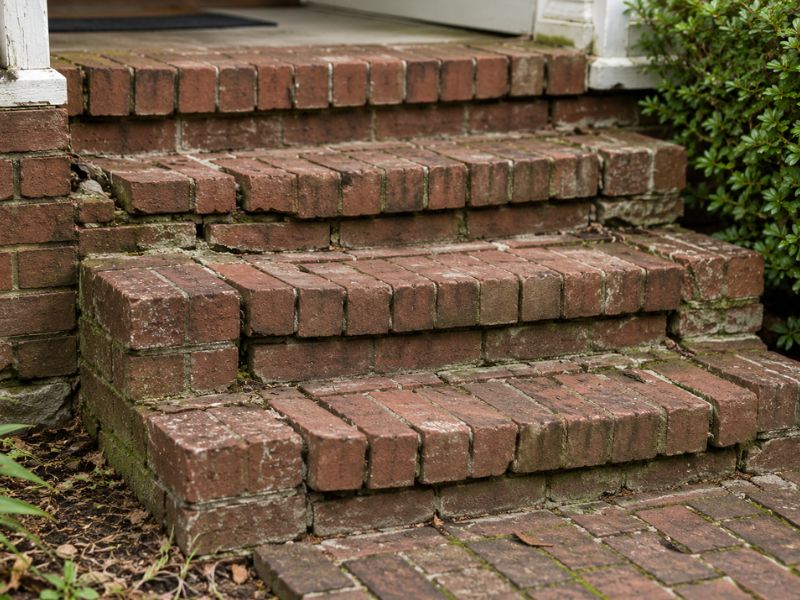
Brick steps can look solid for years and then start to wobble underfoot. One tread rocks a little, a corner sits higher than it used to, and the whole staircase suddenly feels off. Most of the time, the loose brick you notice is only the surface of the problem. The real cause usually sits below the steps or inside the joints holding them together. Knowing what actually moves your brick steps helps you fix them once instead of patching the same spot every year. Here is what tends to go wrong, and why.
How Settlement Beneath Brick Steps Creates Uneven Treads
Every set of brick steps rests on a base of packed soil or fill. When that base wasn’t compacted well during the build, it slowly gave way under the weight above it. Different parts of the ground can sink at different speeds, so one section of the stairs drops while another stays put. That uneven drop is what leaves you with tilted treads and a gap where things used to line up.
Water makes this worse over time. Rain that flows under or around the steps can wash out small amounts of soil with every storm. As that soil disappears, the support beneath the bricks shrinks, and the masonry follows it down. This is why erosion often shows up as sinking on the side that faces the downhill flow.
Resetting only the bricks you can see rarely fixes this kind of movement. The bricks look fine again for a while, but the ground below keeps shifting. Unless the base gets rebuilt or re-supported, those same treads will sink again.
Why Mortar Joints Lose Their Grip on Individual Bricks
Mortar is the glue that holds each brick in place, and it doesn’t last forever. Years of foot traffic send small shocks through the steps every single day. Add in weather, freeze and thaw cycles, and plain age, and the mortar slowly turns brittle and starts to crumble. Once the bond weakens, a brick that used to sit tight begins to rock.
The bricks at the edges usually loosen first. Step corners and the front lip of each tread take the most direct pressure from feet landing on them. Landing areas at the top and bottom of the stairs also get heavy use, so their joints wear down sooner than the ones in the middle. Crumbling mortar is one of the most common reasons masonry units drift out of position.
You can often catch this early. Look for thin cracks in the joints, missing bits of mortar, or a light gray dust near the base of a brick. Those small signs tend to show up before a brick actually comes loose.
How Poor Step Geometry Concentrates Pressure
Not every problem starts underground. Sometimes the way the steps were built puts too much weight on too little support. Treads that vary in depth, risers that don’t line up, and mortar beds spread too thin all create weak points. When one small area carries more load than it should, that area gives out first.
Picture a tread whose front edge hangs out past its support. Every footstep presses down on that unsupported lip with nothing solid beneath it. Over months and years, the repeated pressure cracks the joint and lets the brick begin to rock. A staircase built with uneven geometry basically picks its own failure points.
These flaws often hide until the steps see real use. A stair that feels fine when new can develop rocking bricks and cracked joints once thousands of footsteps have done their work. The uneven walking surface you feel later was usually built into the stairs from the start.
When Nearby Structures Pull Brick Steps Out of Alignment
Brick steps rarely stand completely on their own. They usually connect to a porch, a foundation, a walkway, a landing, or a railing post. Each of those pieces may have been built at a different time and on a different base. When two connected structures settle at different rates, something has to give at the point where they meet.
That meeting point is where cracks and height changes tend to appear. You might see the steps pulling away from the porch, or a lip forming where the walkway meets the bottom tread. A railing post that shifts can drag nearby bricks along with it. These gaps are a sign that the movement is coming from the connection, not just the steps.
Fixing the visible crack alone usually misses the real story. If the porch or foundation keeps moving, the same separation opens back up. That connection needs to be checked before anyone patches the masonry between them.
Why Earlier Spot Repairs Sometimes Fail Again
Patching one loose brick feels like a quick win, and for a little while it is. A mason scrapes out the old mortar, packs in fresh material, and the brick sits tight again. The trouble comes when the base, the neighboring bricks, or the step structure is still moving. Fresh mortar can’t hold a brick still while everything around it keeps shifting.
That’s why the same brick, or the one right beside it, often loosens again within a season or two. Each repair treats the symptom while the real cause sits untouched below or beside it. Homeowners can end up paying for the same small fix over and over.
When looseness keeps spreading across several bricks, the stairs are telling you something bigger. At that point, a full look at the base, the connections, and the step layout makes more sense than another patch. A mason who inspects the whole assembly can find the source instead of chasing it one brick at a time.
Frequently Asked Questions
Why does only one brick step move when the others feel solid?
One brick can move on its own for a few reasons. It may have a failed mortar bond, weak support directly beneath it, or more foot pressure than the bricks around it. Corner and edge bricks are especially prone to this because they take concentrated weight. Still, a single moving brick can be an early warning of a wider support problem, so it’s worth watching.
Can loose brick steps be caused by foundation movement?
Yes, movement in a nearby foundation or porch can travel into attached steps. This happens most when the two structures sit on different bases and settle at different rates. As one side shifts, it pulls or pushes the steps connected to it. The source of the movement should be found before the visible brick gets repaired.
Does repointing always fix loose brick steps?
No, repointing only replaces worn mortar in the joints. That helps when tired mortar is the whole problem, but it does nothing for a sinking base, lost support, or movement between connected structures. If the ground or the porch keeps shifting, fresh joints will crack again. The repair has to match the real cause, not just the surface.
When should several uneven steps be rebuilt rather than patched?
Rebuilding starts to make sense when the problems stack up. Multiple treads have shifted, the base has settled, joints keep failing, or the steps no longer hold even tread and riser heights. At that stage, patching one brick at a time rarely keeps up. A mason should inspect the full staircase before deciding between a repair and a rebuild.
