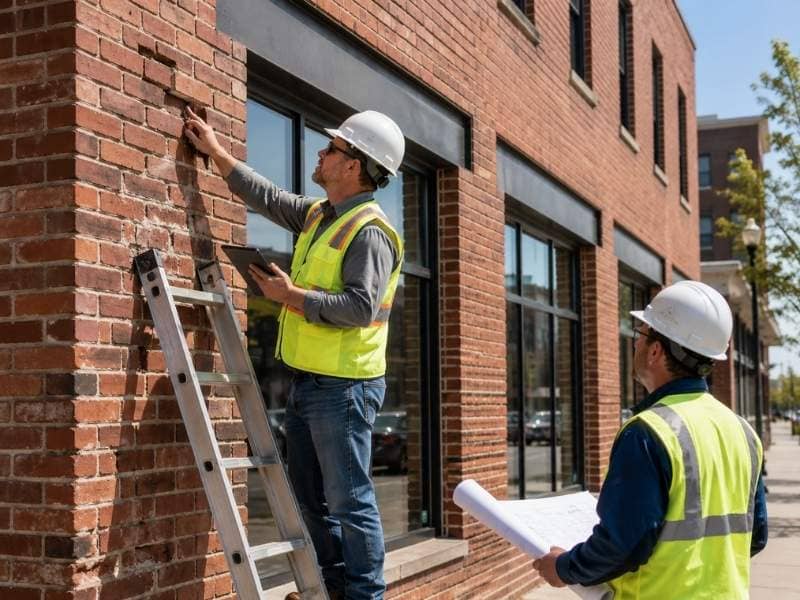
Brick masonry often appears durable, but visible surfaces do not always reveal the condition of the wall system. A brick mason review provides a professional assessment of the brickwork, mortar joints, and other visible masonry components to identify signs of deterioration, damage, or maintenance needs. For property owners, buyers, and managers of commercial buildings, this review can help identify issues early, support maintenance planning, and determine whether additional evaluation or repairs may be needed before problems become more extensive.
What a Brick Mason Review Covers
A brick mason review is a hands-on inspection of a building’s masonry. The mason walks the walls and checks the brick, the mortar and the way the wall is put together. This is different from a general building inspection. A mason knows brick deeply and spots issues a general inspector may walk right past. Years of laying and repairing brick teach a trained eye where trouble hides.
The review looks at the whole masonry system, not just the surface. Brick walls rely on mortar, flashing and support to stay sound. A mason checks how these parts are holding up and where they’re starting to fail. The mason also looks at the details that matter on commercial buildings, like control joints, lintels over openings and the ties that hold a brick face to the wall behind it. The result is a plain report on the wall’s condition and what it will take to keep it standing.
Common Problems a Mason Finds
Older commercial masonry tends to share a set of problems, and a mason knows where to look. Failing mortar is near the top. Over decades, mortar joints crack, crumble and wash out, which lets water in and weakens the wall. A mason can tell how far the decay has gone by testing the joints and checking how deep the damage runs.
Water damage is another common find. Bricks that trap water can crack and flake as they freeze and thaw, a process that slowly breaks the face off the brick. Bulging or leaning sections point to deeper structural trouble, often a sign that the ties or supports behind the face have failed. The mason also checks for past repairs done with the wrong materials. A hard modern mortar used on soft old brick, for example, can trap stress and crack the brick faces around it. These bad fixes often cause more harm than the original problem.
Why the Review Matters Before You Buy
For a developer, the timing of the review is everything. Done before a purchase, it tells you what you’re really buying. Masonry repair on a commercial building can run into serious money, and that cost belongs in your offer. A wall that needs full repointing or rebuilding changes the math on a deal, sometimes by a lot.
The review also gives you leverage. If the mason finds real problems, you can ask the seller to fix them, drop the price or plan the repair into your budget with eyes open. Without the review, you inherit whatever the walls hide and pay for it later. A few hours of a mason’s time can save you from a purchase that looked fine and turned into a money pit.
Why It Matters Before a Renovation
The review shapes a renovation just as much as a purchase. You need to know the wall’s condition before you attach new work to it or change how it carries load. Cutting a new opening or adding weight to a wall that’s already weak invites failure. A mason’s read tells you what the existing masonry can handle.
Skipping this step can mean building on top of a problem. New finishes over failing brick just hide the decay while it keeps spreading. A mason’s review lets you fix the masonry first and build on something sound. That order protects both the new work and the money you put into it.
Turning the Review Into a Repair Plan
A good review doesn’t just list problems. It points toward fixes and their rough order of importance. Some issues, like a small area of loose mortar, can wait and be watched. Others, like water getting behind the wall, need quick action before they spread. The mason helps you tell the two apart, which keeps you from spending on the wrong things first.
This lets you plan repairs by priority and budget. You can tackle the urgent safety and water issues first, then schedule the rest over time as cash allows. Knowing the full scope also helps you get accurate bids instead of vague guesses, since contractors can price a clear list of work. A clear plan keeps a masonry problem from turning into an emergency down the road, which is always the most expensive way to fix anything.
