Big yards look great, but they can feel a little scattered. The patio sits over here. The garden hides way over there. The pool feels like its own island. A masonry walkway ties all of it together. It gives you one clear path from spot to spot, and it makes the whole yard read as a single space instead of a set of separate ones.
This matters a lot around Auburn, where many homes sit on larger residential lots. More land is a gift. It also means more distance between the places you actually use. The right walkway fixes that. A few smart choices make it simple to plan one that works with your yard and looks like it belonged there all along.
Why Larger Yards Often Need Better Connections
On a big lot, the useful spots often end up spread far apart. The back patio might sit near the house while the garden waits in a far corner. Walk out to the pool and you cross a wide stretch of grass to get there. Each area works fine on its own. Together, they can feel like little islands with no clear way between them.
A masonry walkway solves that. It gives you a set path that links the home to the garden, the patio, the pool and any other spot you visit often. You always know where to step, even after dark or after rain. The yard starts to feel like one connected place.
The best walkways follow how people already move. Watch your family for a week and you’ll see the same routes worn into the grass. Those worn lines show you where a path belongs. When you build along the way people naturally walk, the walkway feels right from day one.
Planning a Masonry Walkway Around Existing Yard Features
Before you lay a single stone, look at what’s already there. Slopes, big trees, garden beds, low wet spots and any sheds or fences all shape where a path can go. A good plan works around these features instead of fighting them. That saves money and keeps your yard healthy.
The shortest route is not always the smart one. A straight line might cut right through a tree’s roots or run across a soggy patch that never dries. Curving the path a few feet to one side can dodge both problems. So the goal is a route that flows well and avoids trouble, even if it bends a little.
You also want the walkway to fit the yard as a whole. Too many hard paths can chop the lawn into small, awkward pieces. One well placed walkway, with maybe a short branch or two, keeps things open and simple. That way the yard still feels roomy, and every area stays easy to reach.
Choosing Masonry Materials for a Cohesive Outdoor Look
Material sets the whole mood of the path. Brick brings a warm, classic feel and lays out in neat patterns. Natural stone looks more rugged and rarely repeats the same shape twice. Concrete pavers cost less and come in many colors and styles. Each one holds up well outdoors with the right install.
A few things guide the choice:
- Color that works with your home and won’t clash with your roof or siding
- Texture that gives grip but still feels smooth under bare feet
- Pattern and size that suit the scale of your yard, since large stones can overwhelm a narrow path
Tie the walkway to what’s already on your property. If your house has red brick, a brick or warm stone path echoes it nicely. If you already have a stone patio, matching or blending that stone makes the two areas read as one design. A matched path looks planned from the start.
How Walkway Design Affects Comfort, Safety, and Maintenance
Good design shows up every time you use the path. Width comes first. A walkway meant for two people to pass should run about four feet wide, while a simple garden path can be narrower. A steady, even surface keeps toes from catching, and smooth changes from one section to the next stop the little trips that a raised edge can cause.
Water is the other big factor. A path should shed rain to the sides so puddles don’t sit on top or freeze in winter. A slight slope built into the surface does this without you ever noticing it. Good drainage also protects the base underneath, and that base is what keeps the whole walkway from shifting over the years.
Every masonry walkway needs some care, but a well built one needs very little. Weeds can sprout in the joints, so tight joints or the right filler cut that down. Stains from leaves or spills wipe off faster on sealed stone. Freezing and thawing can nudge units loose, yet a solid base and clean drainage keep movement small. A quick sweep and a yearly look-over handle most of it.
Creating a Masonry Walkway That Feels Like Part of the Landscape
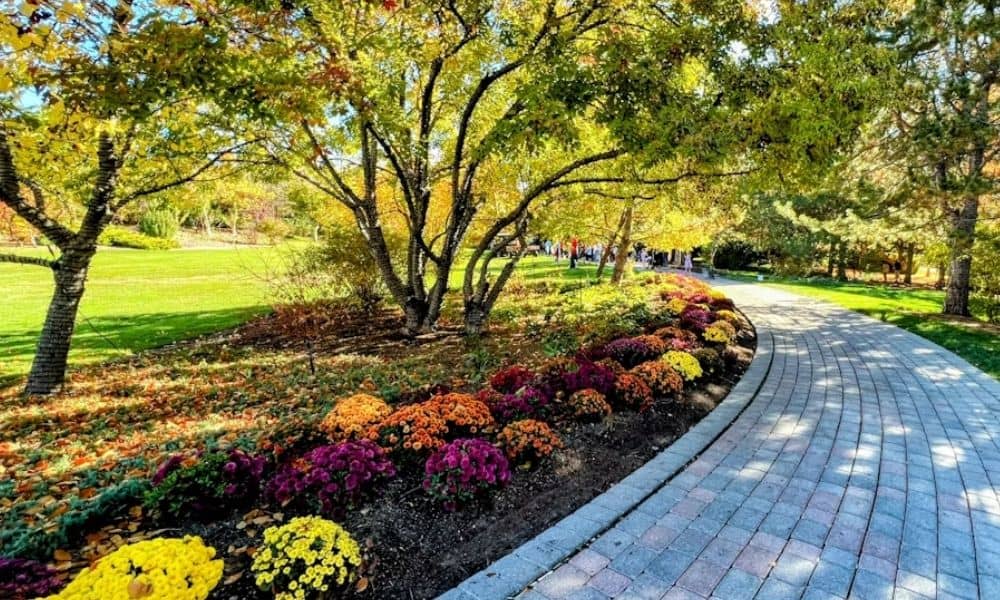
The best paths do more than move you from spot to spot. They add something to the view along the way. A gentle curve feels more natural than a stiff straight line, and it pulls your eye through the yard. Small planting pockets beside the path, or a birdbath or bench at a bend, give you a reason to slow down and enjoy the walk.
Plants do a lot of the work here. Low flowers, grasses or ground cover along the edges soften the hard lines of brick or stone. Set them back a bit so leaves and stems never crowd the walking surface. The path stays clear and safe while the greenery makes it feel settled into the yard.
On a larger property, all these pieces get harder to juggle. More distance means more slope changes, more drainage to manage and more ways for a path to go wrong. A skilled mason reads the land, picks the right base for your soil and lays a walkway that stays level and looks good for decades. Smart planning up front turns a long walk across the yard into one of the best parts of your day.
Frequently Asked Questions
How wide should a masonry walkway be?
It depends on how the path gets used. A main route where two people walk side by side works well at around four feet. A quiet garden path can drop to two or three feet. Match the width to the traffic it carries and to how the space around it feels.
What’s the best material for a backyard walkway?
There’s no single best pick. Brick suits a classic home, natural stone fits a relaxed look, and pavers stretch a tight budget. Choose the one that matches your house and patio so the whole yard looks like one plan rather than a mix of leftover parts.
Do masonry walkways need much upkeep?
Not much when they’re built well. Sweep off leaves and debris now and then, pull any weeds that pop up in the joints, and seal the surface if you want easier stain cleanup. A yearly check for loose or lifted pieces catches small problems before they grow.
Can a walkway be built on a sloped yard?
Yes. A mason can grade the path, add steps where the slope gets steep, and build in drainage so water runs off to the sides. Planning for the slope early keeps the finished walkway safe and steady for years.
Why hire a professional instead of building it myself?
A pro handles the parts that are easy to get wrong, like the base depth, the drainage and keeping everything level over a long run. On a big lot with slopes and trees, that skill is what keeps the path from sinking or cracking within a few seasons.
