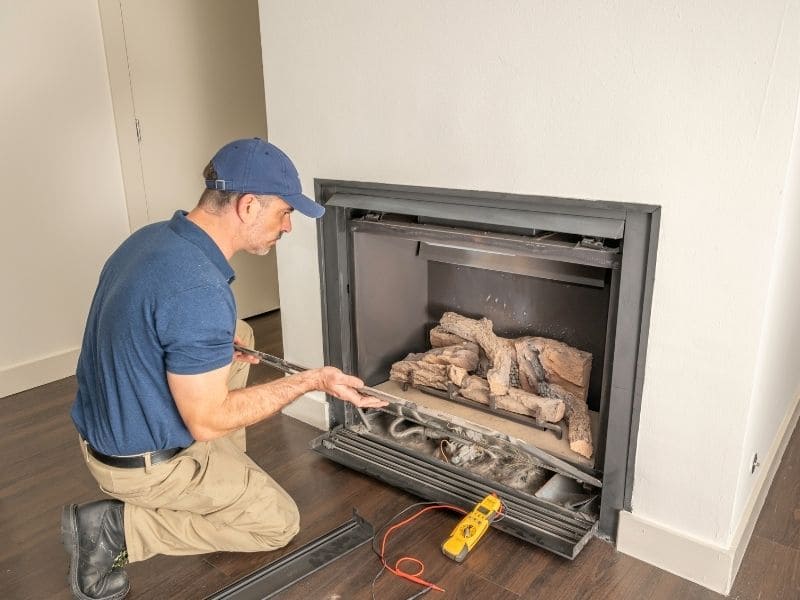
New glass doors get a homeowner looking closer at the fireplace than they have in years. You measure the opening, run a hand along the brick, and notice a cracked firebrick or crumbling mortar you’d stopped seeing. That moment is the right time for fireplace repair, because the doors will frame the opening and partly hide its edges for as long as they’re installed. Fix the masonry first, and the doors fit better, seal better, and last longer.
This guide is for homeowners planning glass doors on a wood-burning masonry fireplace. It covers what damage to look for, what to check before installation, common repairs, and how to choose doors that fit. Every fireplace is different, so have a qualified mason or chimney professional inspect it before work begins.
When New Glass Doors Reveal Existing Fireplace Damage
New glass doors often reveal damage simply because planning puts your eyes on every inch of the opening. Problems that hide in a dark firebox or behind soot become obvious with a tape measure and a flashlight. Catching them now keeps you from mounting new doors onto masonry that needs work.
Common signs include cracked or loose firebricks, gaps in mortar joints, soot streaks on the face above the opening, and rust on the steel lintel. A lintel is the steel angle or bar that supports the brick above the fireplace opening. If it’s rusted or sagging, the doors may not sit square, and the brick above may start to crack.
Smoke stains on the face deserve a second look. They can point to draft problems or gaps that let smoke escape into the room. Glass doors won’t fix a draft issue, so ask a professional to check the damper and chimney too.
What to Check Around the Firebox Before Installation
Before installation, check the firebox walls, the opening edges, the lintel, the hearth, and the fireplace face where the door frame will sit. Each one affects how the doors mount and seal. A short checklist keeps the review focused:
- Firebrick condition, including cracks, flaking, and loose units
- Mortar joints inside the firebox and around the opening
- Squareness of the opening at the top, middle, and bottom
- The steel lintel for rust, sagging, or loose brick above it
- The hearth surface for level, cracks, and loose brick or stone
- The brick or stone face for flatness where the frame will rest
Measure the opening in several places. Many older fireplaces are slightly out of square, and the width at the top may not match the bottom. Those differences affect which door style and frame size will work.
Many door frames seal against the face or the edges of the opening. Rough, uneven brick masonry or stone masonry can leave gaps that let air and smoke leak around the frame. Installers sometimes use gaskets or insulation to fill small gaps, but large irregularities may need masonry work first.
Fireplace Repair for Cracks, Joints, and Worn Masonry
Fireplace repair before glass doors usually focuses on the firebox, the joints, and the opening. The goal is a solid, square, heat-ready surface for the doors to mount against. The right repair depends on the damage and how the fireplace was built.
Firebrick is a dense brick made to handle high heat. Cracked or loose firebricks can often be replaced one at a time, while widespread damage may call for relining the firebox. Repairs inside the firebox should use heat-rated refractory materials.
Worn or missing mortar inside the firebox should be raked out and refilled with refractory mortar. Joints on the outer face, around the opening, can usually be repointed with mortar matched to the existing brick. Repointing means removing damaged mortar to a set depth and packing in fresh mortar.
Choosing Glass Doors That Fit the Fireplace Opening
The right glass doors fit the opening’s size, shape, and surface, and they suit how you use the fireplace. Doors come in different mounting styles, frame finishes, and glass types. Fit matters more than style for long-term performance.
Mounting style is the first decision. Some doors fit inside the opening, while others overlap the face and seal against the surrounding brick or stone. Inside-fit doors need a fairly square opening, and overlap styles can hide minor edge flaws but need a flat surface to seal against.
Glass type and use rules matter too. Tempered glass and ceramic glass handle heat differently, and manufacturers set rules for how their doors should be used during a fire, including whether they can stay closed. Follow the manufacturer’s instructions and confirm the doors are listed for your type of fireplace.
Hearth height can also affect your choice. A hearth level with the firebox floor works differently than a raised hearth with a step. Measure carefully and share photos with the supplier before ordering.
Planning the Installation After Fireplace Repairs
Plan the installation for after all fireplace repairs are complete and the new mortar has cured. Mounting doors on fresh mortar can disturb joints before they set. Ask your mason how long to wait before installing the doors and before building a fire.
Keep the sequence simple. Firebox and lintel repairs come first, then repointing on the face, then a final measurement of the finished opening. Re-measuring after repairs makes sure the doors match what’s actually there.
Some doors attach to the lintel or masonry with clamps or anchors. Drilling into old brick or stone takes care to avoid cracking it. Have a professional handle mounting if you’re unsure, and keep the door manual for future maintenance.
Frequently Asked Questions
Should I repair my fireplace before installing glass doors?
Yes, if there’s damage around the firebox, opening, or face. Glass doors frame and partly cover the opening, which makes later repairs harder. Repairs also help the doors fit squarely and seal well. Have the fireplace inspected before you order doors.
Can glass doors hide fireplace damage?
They can hide some damage from view, but they don’t fix it. Cracked firebrick, loose mortar, or a rusted lintel can keep getting worse behind the doors. Hidden damage can also affect safety and performance. Repair it before installation.
How do I measure for glass fireplace doors?
Measure the opening’s width at the top and bottom and its height on both sides. Note the depth and how far the face extends around the opening. Older fireplaces often aren’t perfectly square. Share these measurements and photos with your supplier.
Do glass doors improve fireplace efficiency?
Glass doors can reduce warm room air escaping up the chimney when the fireplace isn’t in use. During a fire, results depend on the door design and how it’s used. They aren’t a substitute for a working damper. Follow the manufacturer’s guidance on use.
How long after repairs can I install doors and use the fireplace?
That depends on the materials used and the extent of the repair. Mortar needs time to cure before it takes heat and mounting stress. Your mason can give a timeline for your specific repair. Wait for their go-ahead before building a fire.
