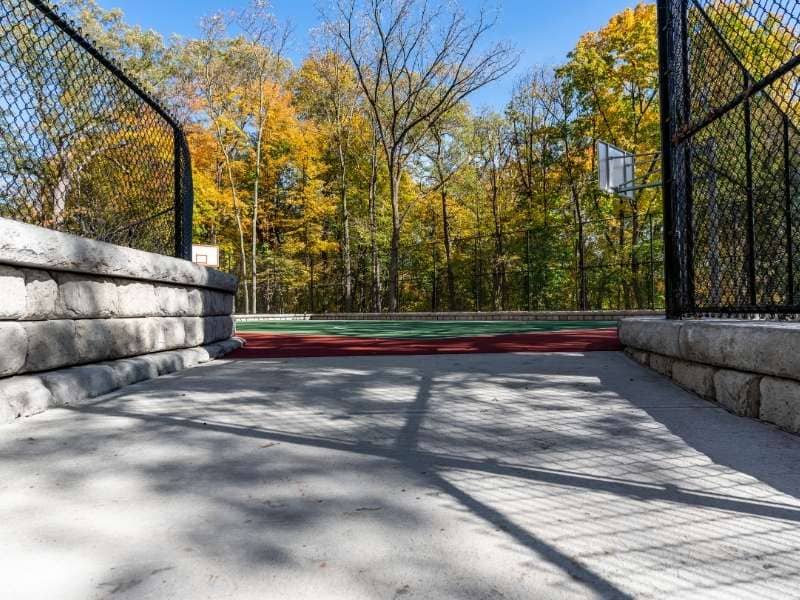
A backyard sport court needs flat ground, and a few yards start out that way. Most courts are built by cutting into a slope, filling a low corner, or both. That grading leaves a change in elevation, and a retaining wall usually holds it in place.
A well-planned wall keeps soil off the court, moves water away from the surface, and gives the yard a finished edge. A rushed one can lean, crack, or trap water within a few seasons. Settle the wall layout, drainage, materials, and connections to the rest of the yard before the court goes in.
Planning Retaining Walls Around the Sport Court
Plan the retaining wall during grading, before any court surface is placed. Where the wall sits decides how much flat space you get and where soil and water end up. Moving a wall later usually means cutting into finished work.
Leave a buffer between the court boundary and the wall face. Players chase balls past the lines, and a hard wall right at the edge is a safety risk. Turf, gravel, or pavers can fill that strip and give runoff somewhere to go.
Height matters too. A low wall can double as seating for people watching a game. Taller walls, or walls holding back a driveway or steep bank, may need an engineer’s design and a permit depending on local code and site conditions.
Before work starts, walk the site with your contractor and confirm:
- How much the grade changes across the court footprint
- Where water flows during heavy rain today
- Whether the wall will also serve as seating or a fence base
- How the court will connect to the house, patio, or outdoor kitchen
Choosing Stone Masonry for Durable Court Edges
Stone masonry suits court edges because it handles impact, weather, and steady foot traffic well. The right choice depends on appearance, budget, upkeep, and the masonry already on your property. No single material wins in every yard.
Natural stone gives a rugged look that blends into planting beds. Cut stone with a flat cap creates a crisp edge beside a modern court. Segmental wall block interlocks without mortar and fits many mid-height walls. Brick masonry facing can tie the area to a brick home, though a brick wall holding soil usually needs a structural core of reinforced block or concrete behind it.
Pay Attention to the Cap
The cap is the top course that finishes the wall. Beside a court, it takes hits from balls, shoes, and people sitting between games. Pick a thick, smooth cap with eased edges, and make sure it’s set firmly so it won’t rock or chip.
Managing Drainage Behind the Retaining Wall
Water is the most common reason a retaining wall fails. Rain-soaked soil gets heavier and pushes harder against the wall. Without an exit, that pressure builds until the wall leans, bulges, or cracks.
Good drainage behind a court wall often includes clean crushed gravel behind the stone, a perforated drain pipe at the base, and filter fabric that keeps fine soil out of the gravel. Mortared walls also use weep holes, which are small openings near the bottom that let trapped water escape. Each piece has a job, and skipping one weakens the whole system.
The outlet matters as much as the drain. It should carry water away from the court, the house, and any patio. Courts are built with a slight slope for runoff, and that water shouldn’t end up at the base of your wall. Exact design depends on soil type, slope, and wall height, so ask your contractor to show you on the plan where water will travel.
Connecting Courts to Patios With Stone Pavers
A court rarely stands alone. Most families want a path to the house, a place to sit, and maybe an outdoor kitchen or outdoor fireplace nearby. Stone pavers and brick pavers both link these spaces well.
Stone pavers offer natural color and a textured surface with good grip. Brick pavers bring a classic look that pairs nicely with a brick patio or brick home. Choose based on style, traffic, maintenance, and the masonry you already have.
Make the walkway wide enough for two people carrying gear to pass without stepping into the grass. Stake it out before deciding, since the right width depends on traffic and layout. Where the court meets pavers, the edge should sit flush with no lip to catch a foot. Where the wall breaks the grade, stone steps or a gentle sloped walk can join the levels. Every paver area also needs a compacted gravel base and firm edge restraints so pavers don’t spread or sink.
Maintaining Retaining Walls and Hardscape Transitions
Walls and paver transitions need simple, regular checks. Walk the area each spring and after major storms. Small problems cost far less to fix early.
Watch for stones that lean or bulge, cracked mortar or cap stones, clogged weep holes or drain outlets, and pavers that sink or lose joint sand near the court. Keep outlets clear and refill paver joints when they wear low. Cracked mortar may need repointing, which means removing damaged mortar and packing in fresh mortar. A leaning or bulging wall calls for a mason soon, since it usually points to drainage or base problems behind the stone.
Frequently Asked Questions
How tall can a retaining wall be next to a sports court?
Height limits depend on local code, soil, and what the wall supports. Many areas require a permit or an engineer’s design above a set height. Walls holding back a driveway or steep slope may need review even when they’re shorter. Your contractor or local building office can confirm what applies to your property.
How far should a retaining wall sit from the court edge?
Most owners leave a buffer between the playing area and the wall face. That space gives players room to stop and gives runoff a place to drain. The right distance depends on the sport, yard size, and slope. Turf, gravel, or pavers fill the gap well.
Are brick pavers or stone pavers better for connecting a court to a patio?
Neither is better in every case. Stone pavers offer texture and natural color, while brick pavers suit brick homes and patios. Both can last many years with a solid gravel base and edge restraints. Your choice depends on style, budget, upkeep, and existing masonry.
What drainage does a retaining wall near a court need?
Most walls need gravel backfill, a perforated drain pipe at the base, and filter fabric. Mortared walls also use weep holes to release trapped water. The outlet should send water away from the court, house, and patios. The exact design depends on soil, slope, and wall height.
How often should I inspect a retaining wall around a sports court?
A quick check each spring and after heavy storms works for most yards. Look for leaning stones, cracked joints, clogged drains, and sinking pavers. Catching small issues early keeps repairs smaller. Call a mason if you see bulging or soil washing out from the base.
Plan the Court and Wall Together
A backyard sport court needs flat ground, and a few yards start out that way. Most courts are built by cutting into a slope, filling a low corner, or both. That grading leaves a change in elevation, and a retaining wall usually holds it in place.
A well-planned wall keeps soil off the court, moves water away from the surface, and gives the yard a finished edge. A rushed one can lean, crack, or trap water within a few seasons. Settle the wall layout, drainage, materials, and connections to the rest of the yard before the court goes in.
Planning Retaining Walls Around the Sport Court
Plan the retaining wall during grading, before any court surface is placed. Where the wall sits decides how much flat space you get and where soil and water end up. Moving a wall later usually means cutting into finished work.
Leave a buffer between the court boundary and the wall face. Players chase balls past the lines, and a hard wall right at the edge is a safety risk. Turf, gravel, or pavers can fill that strip and give runoff somewhere to go.
Height matters too. A low wall can double as seating for people watching a game. Taller walls, or walls holding back a driveway or steep bank, may need an engineer’s design and a permit depending on local code and site conditions.
Before work starts, walk the site with your contractor and confirm:
- How much the grade changes across the court footprint
- Where water flows during heavy rain today
- Whether the wall will also serve as seating or a fence base
- How the court will connect to the house, patio, or outdoor kitchen
Choosing Stone Masonry for Durable Court Edges
Stone masonry suits court edges because it handles impact, weather, and steady foot traffic well. The right choice depends on appearance, budget, upkeep, and the masonry already on your property. No single material wins in every yard.
Natural stone gives a rugged look that blends into planting beds. Cut stone with a flat cap creates a crisp edge beside a modern court. Segmental wall block interlocks without mortar and fits many mid-height walls. Brick masonry facing can tie the area to a brick home, though a brick wall holding soil usually needs a structural core of reinforced block or concrete behind it.
Pay Attention to the Cap
The cap is the top course that finishes the wall. Beside a court, it takes hits from balls, shoes, and people sitting between games. Pick a thick, smooth cap with eased edges, and make sure it’s set firmly so it won’t rock or chip.
Managing Drainage Behind the Retaining Wall
Water is the most common reason a retaining wall fails. Rain-soaked soil gets heavier and pushes harder against the wall. Without an exit, that pressure builds until the wall leans, bulges, or cracks.
Good drainage behind a court wall often includes clean crushed gravel behind the stone, a perforated drain pipe at the base, and filter fabric that keeps fine soil out of the gravel. Mortared walls also use weep holes, which are small openings near the bottom that let trapped water escape. Each piece has a job, and skipping one weakens the whole system.
The outlet matters as much as the drain. It should carry water away from the court, the house, and any patio. Courts are built with a slight slope for runoff, and that water shouldn’t end up at the base of your wall. Exact design depends on soil type, slope, and wall height, so ask your contractor to show you on the plan where water will travel.
Connecting Courts to Patios With Stone Pavers
A court rarely stands alone. Most families want a path to the house, a place to sit, and maybe an outdoor kitchen or outdoor fireplace nearby. Stone pavers and brick pavers both link these spaces well.
Stone pavers offer natural color and a textured surface with good grip. Brick pavers bring a classic look that pairs nicely with a brick patio or brick home. Choose based on style, traffic, maintenance, and the masonry you already have.
Make the walkway wide enough for two people carrying gear to pass without stepping into the grass. Stake it out before deciding, since the right width depends on traffic and layout. Where the court meets pavers, the edge should sit flush with no lip to catch a foot. Where the wall breaks the grade, stone steps or a gentle sloped walk can join the levels. Every paver area also needs a compacted gravel base and firm edge restraints so pavers don’t spread or sink.
Maintaining Retaining Walls and Hardscape Transitions
Walls and paver transitions need simple, regular checks. Walk the area each spring and after major storms. Small problems cost far less to fix early.
Watch for stones that lean or bulge, cracked mortar or cap stones, clogged weep holes or drain outlets, and pavers that sink or lose joint sand near the court. Keep outlets clear and refill paver joints when they wear low. Cracked mortar may need repointing, which means removing damaged mortar and packing in fresh mortar. A leaning or bulging wall calls for a mason soon, since it usually points to drainage or base problems behind the stone.
Frequently Asked Questions
How tall can a retaining wall be next to a sports court?
Height limits depend on local code, soil, and what the wall supports. Many areas require a permit or an engineer’s design above a set height. Walls holding back a driveway or steep slope may need review even when they’re shorter. Your contractor or local building office can confirm what applies to your property.
How far should a retaining wall sit from the court edge?
Most owners leave a buffer between the playing area and the wall face. That space gives players room to stop and gives runoff a place to drain. The right distance depends on the sport, yard size, and slope. Turf, gravel, or pavers fill the gap well.
Are brick pavers or stone pavers better for connecting a court to a patio?
Neither is better in every case. Stone pavers offer texture and natural color, while brick pavers suit brick homes and patios. Both can last many years with a solid gravel base and edge restraints. Your choice depends on style, budget, upkeep, and existing masonry.
What drainage does a retaining wall near a court need?
Most walls need gravel backfill, a perforated drain pipe at the base, and filter fabric. Mortared walls also use weep holes to release trapped water. The outlet should send water away from the court, house, and patios. The exact design depends on soil, slope, and wall height.
How often should I inspect a retaining wall around a sports court?
A quick check each spring and after heavy storms works for most yards. Look for leaning stones, cracked joints, clogged drains, and sinking pavers. Catching small issues early keeps repairs smaller. Call a mason if you see bulging or soil washing out from the base.
Plan the Court and Wall Together
A sport court is a big investment, and the wall and hardscape around it decides how well it holds up. Before any digging starts, talk with an experienced masonry contractor about layout, materials, drainage, and the condition of your existing patios, walls, and walkways. A clear plan up front prevents rework and gives you a court area that feels like a natural part of your yard.A sport court is a big investment, and the wall and hardscape around it decides how well it holds up. Before any digging starts, talk with an experienced masonry contractor about layout, materials, drainage, and the condition of your existing patios, walls, and walkways. A clear plan up front prevents rework and gives you a court area that feels like a natural part of your yard.
