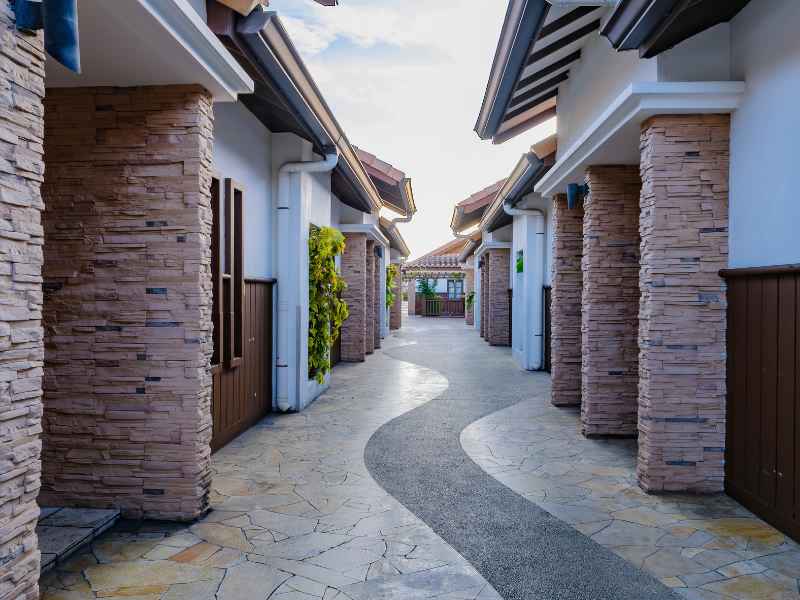
Stone pavers can make a covered breezeway feel like part of the house instead of a leftover strip of concrete. Breezeways are tricky spaces, though. They’re narrow, shaded most of the day, open to blowing rain on the sides, and tied to door thresholds at both ends.
A poorly planned breezeway ends up slick, uneven, or wet right at the doors. A well-planned one feels like a natural hallway between buildings. Work out the layout, finish, drainage, and edge details before any stone is ordered, and the space will hold up to daily traffic for years.
Planning Stone Pavers Layouts for Narrow Covered Breezeways
Narrow spaces show every layout mistake. A pattern that looks great on a wide stone patio can end with sliver cuts along both edges of a five-foot breezeway. Measure the full width and length, then pick a paver size and pattern that keeps edge cuts from getting too thin.
Pattern direction changes how the space feels. Long rectangular stones laid lengthwise make the breezeway read as a path and pull the eye toward the far door. Laid crosswise, the same stones make a tight breezeway look a little wider.
Width deserves a hard look too. Two people should be able to pass each other, and someone carrying groceries shouldn’t brush the columns. If the existing slab is too narrow, now is the time to talk about widening it before new masonry goes down.
Think about what the breezeway connects beyond the two doors. Many breezeways also open onto a patio, an outdoor kitchen, or a path to the driveway. Carrying the same stone or a matching border through those areas makes the whole yard feel planned.
Selecting Stone Pavers and Finishes for Shaded Pedestrian Areas
Shade changes how stone behaves. Breezeway floors stay damp longer after rain, and that moisture invites moss, algae, and mildew. A finish that’s grippy in full sun can get slick in a shaded corridor.
Textured finishes usually perform best here. Tumbled, flamed, or brushed stone gives shoes something to grab. Polished or highly honed surfaces look sharp but can turn slippery when damp, so save them for drier spots.
Color matters in a dim space as well. Lighter stone reflects light and makes a covered area feel more open, while very dark stone can make it feel like a tunnel. Bring a few sample pieces to the breezeway and look at them in the actual shade before you decide.
Brick pavers are worth comparing too. They often match the brick masonry on the house and cut cleanly along edges. The right choice comes down to appearance, budget, maintenance, existing masonry, and how much traffic the breezeway sees.
Creating Smooth Transitions Between Building Entrances With Stone Pavers
The doors at each end set the finished height of the breezeway. Pavers need to sit low enough that water won’t run under the threshold, but high enough that the step into the house doesn’t feel awkward. Measure both thresholds before design starts, because the two buildings may not sit at the same elevation.
When floor heights differ, the breezeway has to make up the change. A gentle, steady slope along the length usually feels better than a single step in the middle. If the difference is large, your contractor may recommend a step or landing, and local code may affect how that gets built.
Watch the joint where pavers meet a door sill or concrete stoop. A small gap or raised edge there becomes a trip point fast. Ask how the installer plans to finish that edge, such as with a soldier course, a cut stone border, or a flush transition.
Managing Rainwater Entering From Open Breezeway Sides
A roof keeps most rain off a breezeway, but not all of it. Wind pushes rain in through the open sides, and roof runoff can splash back onto the edges. The paved surface needs a plan for that water.
Slope the floor toward the open sides and away from both doors. A slight cross slope usually handles normal rain without being noticeable underfoot. The exact slope can vary with paver type, joint style, and site conditions.
Check the breezeway roof gutters and downspouts before paving. A downspout dumping next to the walkway will keep the edge wet and wash out the joints. Redirect it now, while the ground is open.
Base preparation does a lot of quiet work here. A compacted crushed stone base drains far better than native soil and keeps pavers from settling at the wet edges. If the site sits low or the soil holds water, ask whether edge drains or a deeper base make sense, especially where a retaining wall sends water toward the breezeway.
Installing Stone Pavers Around Columns and Building Foundations
Columns are where careful cutting pays off. Each one interrupts the pattern, and rough cuts around a column base stand out more than anything else on the floor. A good stone mason plans the layout so columns land in a logical spot in the pattern instead of forcing awkward slivers.
Column footings and the paver base have to work together. Most breezeway columns sit on their own footings, and the pavers butt against or wrap around them. Leave room for slight movement at that joint so settling in one doesn’t crack the other.
Along building foundations, keep finished paver height below siding and weep holes. Burying weep holes or siding edges traps moisture against the wall. Slope the pavers away from the foundation so water drains out instead of collecting at the wall.
Maintenance stays light when the install is right. Sweep away debris that holds moisture, refill joints as needed, and clean algae with a product suited to the stone. Catching one sinking paver early is easier than resetting a whole section later.
Frequently Asked Questions
What’s the best stone pavers for a shaded breezeway?
A textured stone or brick paver usually works best in shade. Rough finishes stay grippier when damp. Lighter colors help brighten a dim space. The final choice comes down to appearance, budget, and how the material matches nearby masonry.
Can stone pavers go over an existing concrete breezeway slab?
Often they can, if the slab is sound and drains properly. Thin pavers can be mortar-set over concrete that’s in good shape. The added height has to work with both door thresholds. A cracked or poorly sloped slab may need repair or removal first.
How do I keep moss off breezeway stone pavers?
Moss grows where stone stays damp and shaded. Better drainage and airflow help more than any cleaner will. Regular sweeping removes the debris that holds moisture. When cleaning is needed, use a product that’s safe for your specific stone.
