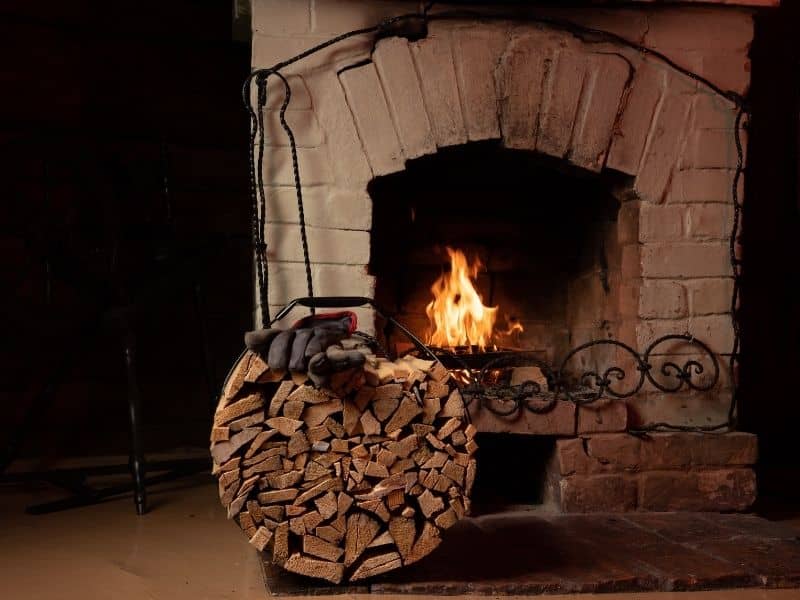
A built-in firewood niche next to a stone fireplace does more than hold logs. It keeps wood dry, keeps bark off the floor, and gives the whole fireplace wall a finished look instead of a stack of logs shoved in a corner. Done right, the niche looks like it was always part of the design. Done wrong, it looks tacked on and it fills up with bark, dust, and bugs. The difference comes down to a few choices made early, before the first stone goes up.
Designing Built-In Firewood Niches Into the Stonework
A firewood niche works best when a mason plans it as part of the fireplace, not as an afterthought. That means picking the opening size, shape, and stone pattern before the wall gets built, not cutting a hole into finished stonework later.
The stone should wrap the opening the same way it wraps the firebox. Matching stone size, color, and joint pattern around the niche ties it to the rest of the fireplace instead of making it look like a separate box stuck on the side. A clean stone lintel or a simple arched top over the opening gives it a finished edge and keeps loose mortar from crumbling into the stored wood.
Some homeowners want the niche flush with the fireplace face. Others want it recessed a few inches so it reads as its own feature. Either works, but the mason needs to know which one before laying stone, since the wall thickness and header support depend on that decision.
Positioning Firewood Storage Without Crowding the Hearth
Where the niche sits matters as much as how it looks. It needs to sit close enough to the fireplace for easy loading, but far enough away that it doesn’t block the hearth or crowd the space where someone kneels down to build a fire.
A good rule is to keep the niche opening at least a foot away from the firebox opening. That gap protects the stored wood from direct heat and keeps someone from reaching past hot brick to grab a log. It also keeps the hearth extension clear, which most local fire codes require for a set distance in front of the firebox.
Think about how people actually move around the fireplace. If the niche sits on the side where people usually stand to add wood, it works. If it sits on the side people walk through to get to a chair or a doorway, it becomes a trip hazard and a dust magnet from foot traffic. Walking the space before construction starts, not just looking at a drawing, catches problems a flat plan misses.
Planning Storage Depth Around Common Split-Firewood Sizes
A firewood niche that looks great but only holds six logs isn’t doing its job. Depth and width should match the wood people actually burn, not just whatever looks balanced on paper.
Most split firewood for a home fireplace runs about 16 to 18 inches long. A niche needs at least that much depth, plus a couple of extra inches so logs aren’t jammed tight against the back wall. Jammed logs are harder to pull out and they knock bark loose every time someone tugs one free.
Width matters too. A narrow niche might look elegant, but it forces someone to stack wood in a single tall column that tips over easily. A wider opening, even just a few extra inches, lets wood sit in a stable low stack that’s easier to load and easier to grab from.
Height should stay practical as well. A niche that’s too tall wastes space at the top and makes the bottom logs hard to reach without bending awkwardly. Sizing the opening around real firewood dimensions, not a guess, is what makes the feature actually get used instead of ignored.
Managing Bark, Debris, and Moisture Inside the Storage Niche
Firewood sheds. Bark flakes off, sawdust collects, and small bugs sometimes ride in with the wood. A niche without a plan for that mess turns into a dusty problem fast.
A raised stone or metal base inside the niche keeps wood off any damp subfloor and makes sweeping out debris easier than trying to clean a floor-level opening. Some designs use a shallow lip at the front edge of the base to catch loose bark before it spills onto the room floor.
Moisture is the bigger concern. A niche built into an exterior-facing wall or near a chimney chase can pick up dampness if it isn’t sealed properly behind the stone. That dampness can make firewood mold instead of dry out, which defeats the whole purpose of indoor storage. A vapor barrier behind the niche stonework, matched to whatever barrier the rest of the fireplace wall uses, keeps moisture from working its way through the masonry.
Good airflow helps too. A niche that’s too enclosed traps humidity around the wood. Leaving a small gap at the top or back, or using an open-front design instead of a door, lets air move through and keeps logs seasoning properly instead of sitting in stale air.
Integrating Firewood Storage Into Custom Home Interiors
Auburn has seen a steady run of custom home upgrades where homeowners want their fireplace wall to feel like a designed feature, not just a functional heat source. A built-in firewood niche fits right into that trend when the proportions and finish match the rest of the room.
Stone choice plays a big part here. Homes going for a traditional look often pair the niche with the same fieldstone or cut stone used on the fireplace face, so the whole wall reads as one continuous design. More modern builds sometimes contrast the niche with a different stone texture or a darker mortar joint, using it as a deliberate accent instead of a match.
Proportion is what separates a niche that looks built-in from one that looks bolted on. A niche scaled too small next to a tall stone fireplace looks like an afterthought. One sized to echo the fireplace opening, even at a smaller scale, reads as intentional.
Details finish the look. A stone shelf above the niche, a matching header style, or trim that lines up with existing millwork in the room all help the storage space feel like part of the original architecture. For homeowners investing in a full fireplace build or renovation, that kind of planning is what turns a firewood spot into a feature worth showing off.
