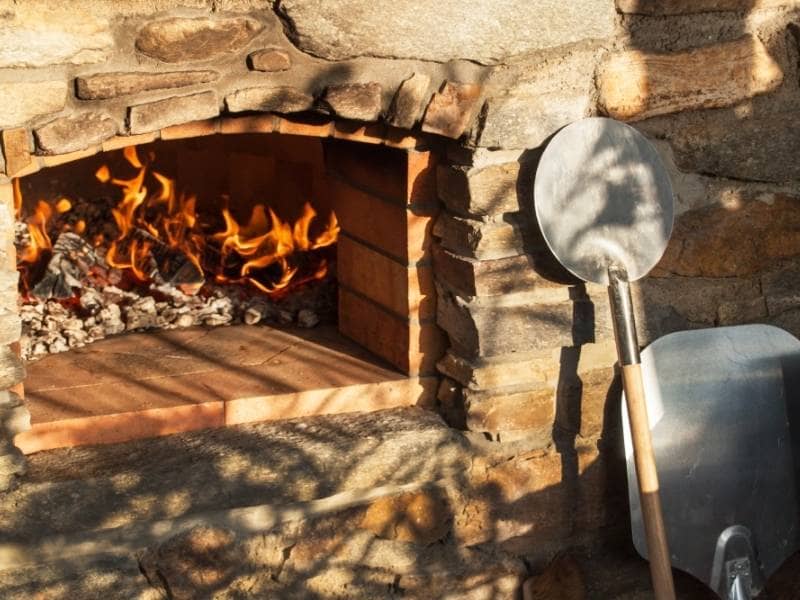
A finished outdoor kitchen masonry pizza oven can weigh well over a thousand pounds. All of that weight rests on the base below it, through every hot fire and every hard rain. A weak base shows its flaws slowly, with small cracks, a slight lean, or pavers that sink around the edges.
Most of those problems can be avoided during planning. For an outdoor kitchen with a built-in oven, the base needs a solid footing, materials that handle heat and weather, and a clear plan for water. Get those three things right, and the oven, the patio around it, and the brick masonry or stone masonry holding it up can serve you for decades.
Planning the Masonry Base for a Built-In Pizza Oven
The base is the structure that lifts the oven to a comfortable working height. It usually includes a footing, block or brick walls, a hearth slab on top, and an insulating layer under the oven floor. Each layer has a job, and skipping one tends to cause trouble later.
Start With the Footing
A built-in oven should sit on a reinforced concrete footing or slab sized for its full weight. Setting it on existing patio pavers is risky, because pavers are built for foot traffic rather than a heavy load in one spot. Footing depth and reinforcement can depend on your soil, frost depth, local code, and the oven maker’s specs, so confirm those details before anyone starts digging.
Set the Working Height and Insulation
Most cooks like the oven floor somewhere between waist and elbow height. Stand where you’ll cook and picture reaching in with a peel, because a few inches either way changes how the whole outdoor kitchen feels. The hearth slab also needs an insulating board or an insulating concrete layer under the oven floor, which keeps heat in the oven and out of the base.
Choosing Brick or Stone for the Outdoor Kitchen
Both brick and stone can make a strong, handsome oven base. The right pick depends on your house, your existing patio, your budget, and how much upkeep you want. Neither material is the best choice for every yard.
Brick gives a clean, even look and pairs well with a brick patio or a brick home. Standard clay brick handles weather well, though any surface that touches flame needs firebrick rated for high heat. Brick is also easier to match later if you add a seating wall or an outdoor fireplace.
Stone has a rugged, natural feel that suits yards with a stone patio, stone steps, or a stone retaining wall. Natural stone is heavy and uneven, so it takes longer to lay, which can raise labor costs. Stone veneer over a block core is another option, but it needs proper flashing and a drainage path behind it to stay attached.
Connecting the Oven Base to Patios and Walkways
The oven base should tie into the surfaces around it so people can move easily between the house, the cooking area, and the seating area. Good connections keep traffic moving and give the cook room to work. They also keep pavers from settling unevenly at the edges of the base.
Leave Room to Work
Plan a clear landing area in front of the oven opening. Walkways to the outdoor kitchen should let someone carrying a tray pass another person, and many designers aim for at least 4 feet of width. The surface right in front of the oven should handle heat and sweep clean, since embers and ash will land there.
Plan the Transitions
Where brick pavers or stone pavers meet the base, the joint needs a clean edge and firm support underneath. Pavers on compacted gravel can settle at a different rate than a concrete footing, so this seam should be planned rather than patched. On a sloped yard, a short step or a low retaining wall may be needed to keep the cooking area level.
Managing Drainage Around the Masonry Installation
Water is the biggest threat to outdoor masonry. It soaks into mortar joints, expands during cold snaps, and washes out the gravel under nearby pavers. Drainage should be part of the design from the first sketch.
Grade the patio so water flows away from the oven base and away from the house. A gentle slope is usually enough, though the right pitch depends on the paving and the site. Avoid placing the base in a low spot where runoff pools after heavy rain.
The top of the base needs protection too. A sloped cap or overhang sheds water off the hearth slab, and a weatherproof finish or small roof keeps rain out of the insulation. Wet insulation loses much of its value and can crack the oven when trapped moisture turns to steam.
Maintaining Durable Outdoor Kitchen Masonry
A well-built base needs less care than most people expect. Walk around it a couple of times a year and look for hairline cracks, loose mortar, or white chalky deposits called efflorescence. Those deposits are salts left behind by moving water, and they often point to a moisture problem worth tracing.
Cure a new oven with small fires before cooking at full heat, since fast heating can crack the dome or hearth. Keep the oven covered when idle, and clear out ash so it doesn’t hold moisture against the floor. Repoint worn mortar joints early, and choose a breathable masonry sealer if you seal at all, because the wrong product can trap water inside.
Frequently Asked Questions
Can I put a pizza oven on my existing patio?
It depends on what’s under the patio. Pavers on a gravel base usually aren’t built to carry the weight of a masonry oven in one spot. A thick, reinforced concrete slab may work, and a mason or engineer can check it. In many cases, the safest plan is to cut out a section and pour a proper footing.
Do I need firebrick for the whole base?
Firebrick is used for the oven floor and the parts that touch flame. The outer walls of the base can be regular brick, block, or stone. The hearth slab needs an insulating layer between it and the firebrick floor. Always follow the oven maker’s specs for materials inside the cooking chamber.
How long does a masonry pizza oven base last?
A well-built base can last for decades with basic care. Its life depends on the footing, drainage, material quality, and how well water is kept out. Bases that sit in wet spots or have cracked caps wear out faster. Regular checks and quick mortar repairs go a long way.
Does brick or stone hold up better in wet weather?
Both can perform well when the base has good drainage and proper flashing. Dense brick and many natural stones resist water on their own. The weak spots are usually mortar joints, caps, and gaps where water sits. Good design matters more than the material in most wet yards.
Should my pizza oven base match my outdoor fireplace?
Matching isn’t required, but it helps the yard feel connected. Using the same brick or stone, or a close color match, ties the features together. You can also match the cap or mortar color if the main materials differ. Set samples outside next to your existing masonry before you decide.
