
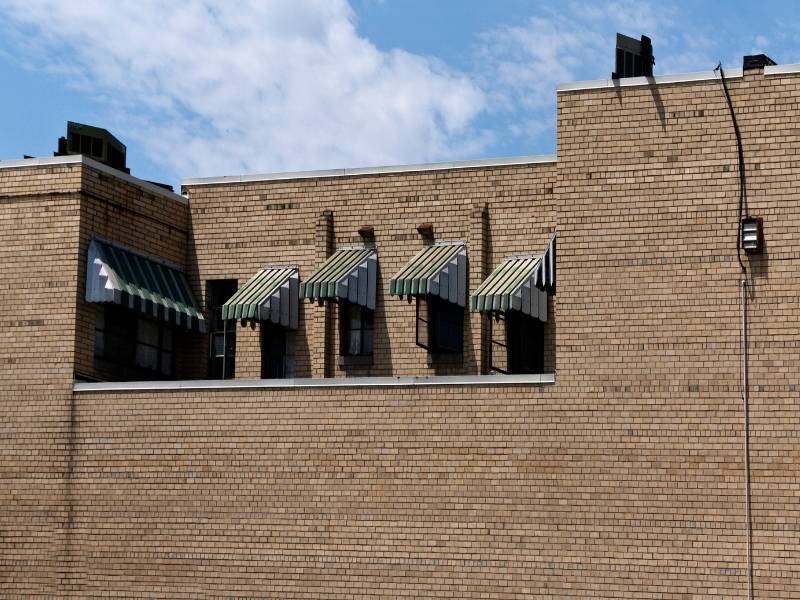
A new canopy over a door, storefront, or patio seems like a simple upgrade. Once it’s bolted to the wall, though, it changes how water hits the brick and blocks easy access to the mortar behind and above it. If the joints around it already need work, repointing becomes much harder after the canopy goes up. Planning brick repointing before canopy installation or replacement usually saves money and gives the canopy a sound wall to attach to.
How Exterior Canopies Affect Moisture Exposure on Brick Walls
A canopy shelters the wall directly beneath it from rain. That part of the wall often stays drier and lasts longer. The areas around the canopy can be a different story.
Water runs off the canopy edges and drips onto the brick and ground nearby. Splashback can wet the lower courses of the wall again and again. If the canopy has gutters, a poorly placed downspout can soak one section of masonry every time it rains.
The joint where the canopy meets the wall is another weak spot. Without good flashing or sealant, water can get behind the canopy and into the mortar joints. Over time, that trapped moisture can wash out mortar, stain brick, and lead to cracking or spalling.
Inspecting Mortar Joints Around Canopy Connections and Supports
Repointing, sometimes called tuckpointing, means removing damaged mortar from brick joints and replacing it with fresh mortar. It restores the wall’s ability to shed water and hold the brick in place. The first step is figuring out which joints actually need it.
Look closely at the area where the canopy attaches or will attach. Check for mortar that’s soft, cracked, recessed, or missing. Scratching a joint with a key can show whether mortar crumbles easily.
Pay attention to the brick, too. Cracked or spalled brick near anchors may point to moisture or movement problems. A mason can tell whether the issue is limited to the mortar or whether some brick needs replacing before the canopy goes up.
Signs repointing may be needed
- Mortar joints recessed deeper than the brick face
- Cracks running through mortar joints
- Sandy or crumbling mortar
- Gaps around existing anchors or brackets
- Water stains or white residue below the canopy line
Scheduling Brick Repointing Before Canopy Installation or Replacement
In most cases, repointing should come first. A canopy can cover joints that need work and make them hard to reach later. Removing and reinstalling a canopy just to repoint behind it adds cost and risk.
Anchors also hold better in sound masonry. Many canopy systems attach with brackets or ledgers fastened into the wall. Fresh, well-bonded mortar gives those fasteners a better base, although the right attachment method depends on the canopy design and wall structure.
Talk with both your mason and canopy installer before scheduling. Share the canopy drawings so the mason knows where anchors and flashing will go. For heavy canopies or questions about load, ask whether an engineer should review the attachment details.
Coordinating Masonry Access and Protection During Canopy Work
Masonry work and canopy work both need room to operate. Scaffolding, ladders, and lifts may be needed for either trade. Planning the sequence keeps one crew from blocking the other.
Protect the brick during canopy installation. Drilling, cutting, and lifting heavy frames can chip brick faces or crack nearby joints. Ask the installer how they’ll drill anchor holes and whether they’ll avoid drilling into the brick face when attaching to mortar joints is an option.
Flashing deserves special attention. Flashing is a thin, waterproof material that directs water away from the joint between the canopy and wall. Agree on who installs it and how it ties into the masonry before work starts, so water doesn’t end up behind the canopy.
Allowing Proper Mortar Curing Before Completing Canopy Improvements
Fresh mortar needs time to cure before it’s stressed. Curing is the process where mortar hardens and gains strength. Drilling or loading anchors too soon can crack new joints.
Curing time depends on the mortar type, weather, and how the work was done. Hot, dry, or windy conditions can dry mortar too fast, while cold weather can slow curing. Your mason may mist the wall or protect it from direct sun to help it cure properly.
Ask your mason how long to wait before canopy anchors go in. Follow their guidance and any product or engineering instructions that apply. A short wait now is far cheaper than repointing damaged joints again after the canopy is up.
Frequently Asked Questions
What is brick repointing?
Brick repointing means removing worn or damaged mortar from between bricks and replacing it with new mortar. It helps the wall shed water and keeps brick secure. It’s often needed as mortar ages and weathers. Many people also call it tuckpointing.
Should I repoint before or after installing a canopy?
Repointing before installation is usually the better plan. A canopy can block access to joints that need work. Fresh mortar also gives anchors a sounder base. Coordinate the schedule with your mason and canopy installer.
Can a canopy cause damage to brick walls?
A canopy can protect the wall below it but create problem spots nearby. Water dripping off the edges can wet the brick repeatedly. Poor flashing at the wall joint can trap water. Good design and drainage reduce those risks.
