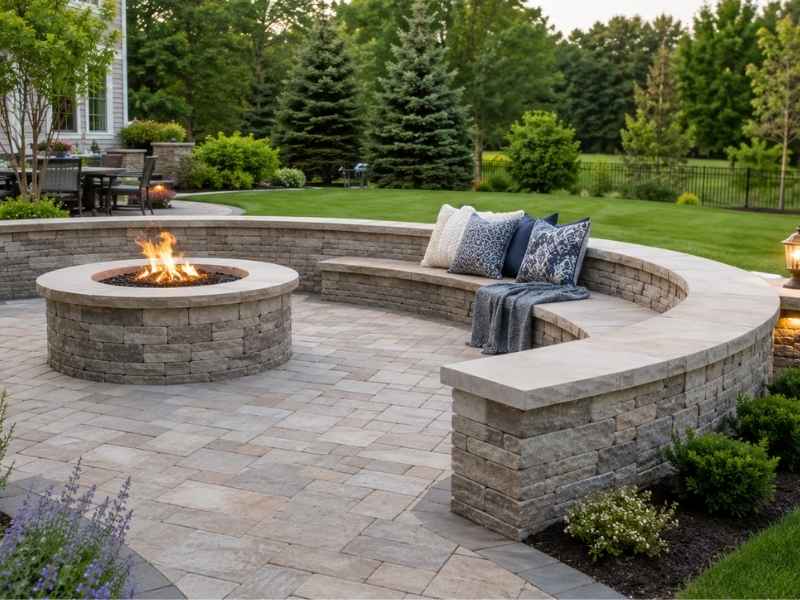
A seat wall does two jobs at once. It gives people a place to sit, and it gives an outdoor space a clear shape. That’s a rare combo in landscape design. Most features either look good or work well, but a seat wall pulls off both without needing extra furniture cluttering up the yard. If you’ve ever hosted a backyard gathering and watched guests hover around with nowhere comfortable to land, a seat wall solves that problem in a pretty simple way.
Creating Defined Outdoor Seating Areas With a Built-In Masonry Feature
Open yards can feel a little aimless without something to organize them. A seat wall changes that fast. It marks off a spot and tells people, without a sign or a fence, that this is where the gathering happens.
That kind of built-in structure gives a yard a sense of purpose. Instead of a wide open lawn where everyone stands around unsure where to settle, a seat wall creates a natural gathering point. Guests drift toward it the way people drift toward a kitchen island at a party. It’s not a retaining wall holding back a slope, and it’s not a patio surface underfoot. It’s a standalone feature built specifically to shape how people use the space around it.
How Seat Walls Add Comfort and Function to Landscape Designs
Extra seating sounds like a small thing until you’re hosting fifteen people and only have room for six chairs. A seat wall solves that instantly, giving guests a place to sit without hauling out folding chairs or crowding around a small table.
Function goes beyond just seating, too. A well-placed seat wall can wrap around a fire pit, line the edge of a patio, or frame a garden bed, doing double duty as both furniture and structure. That combination makes outdoor spaces feel more usable day to day, not just during a party. A yard with built-in seating invites people to actually sit outside and stay a while, instead of walking through it on the way to somewhere else.
Design Options for Masonry Seat Walls That Match Different Home Styles
A seat wall doesn’t have to look like everyone else’s. Shape alone changes the character of the whole feature. A straight run works well for framing a patio edge, while a curved wall softens the space and creates a more relaxed, gathered feeling around a fire pit or seating circle.
Finishes shift the personality further, from a smooth, contemporary surface to a more textured, traditional look that leans into an older home’s style. Cap styles matter more than people expect, too. A wide, flat cap makes the wall genuinely comfortable to sit on, while a narrower cap leans more decorative than functional. Design details like these let a seat wall fit almost any property, whether the home has a modern edge or a more classic feel.
Planning the Location and Layout of an Outdoor Masonry Seat Wall
Placement decides whether a seat wall gets used or just sits there looking nice. Traffic flow matters first. A wall positioned right in the path people naturally walk creates friction instead of comfort, so it needs enough clearance around it for foot traffic to move freely.
Views deserve some thought too. A seat wall facing a garden, a fire feature, or an open part of the yard gives people a reason to actually sit down and stay. Conversation areas benefit from layout choices as well, since walls angled toward each other, rather than lined up in a straight row, make it easier for groups to talk without craning their necks. The wall also needs to connect naturally with the rest of the landscape design, tying into existing paths, patios, or planting beds instead of feeling like it was dropped into the yard on its own.
Long-Term Considerations Before Adding a Permanent Outdoor Seat Wall
A seat wall is a permanent feature, so it’s worth thinking past the first season. Material durability matters a lot here, since the wall needs to hold up to years of sitting, weather, and general outdoor wear without cracking or shifting.
Maintenance expectations vary by material too. Some finishes need almost no upkeep, while others benefit from occasional sealing or cleaning to keep their appearance sharp. Weather exposure plays into that decision as well, especially in regions with harsh winters or heavy sun that can wear down certain materials faster than others. Future outdoor plans are worth factoring in too. A seat wall placed with room to grow around it fits better into whatever changes a yard might go through down the line, instead of becoming an obstacle to work around later.
Frequently Asked Questions
What is a masonry seat wall used for?
A seat wall provides built-in outdoor seating while also adding structure and shape to a landscape. It works as both a functional feature and a visual anchor for the space around it.
How tall should an outdoor masonry seat wall be?
Height usually comes down to comfort and intended use. Most seat walls sit around standard chair height so they’re actually comfortable to use, though some homeowners adjust height based on design goals or the wall’s other purposes.
Can a masonry seat wall be added to an existing yard?
Yes, in most cases. Seat walls can often fit into an existing outdoor space once the layout, traffic flow, and site conditions have been properly considered.
What materials can be used to build a masonry seat wall?
Several masonry materials work well for seat walls, each offering a different look and feel. Homeowners typically choose based on how the material matches their outdoor style and how much upkeep they want to take on.
Does a masonry seat wall require professional installation?
Yes, generally. Proper planning, solid construction methods, and the right material selection all matter for building a seat wall that holds up and performs well for years.
