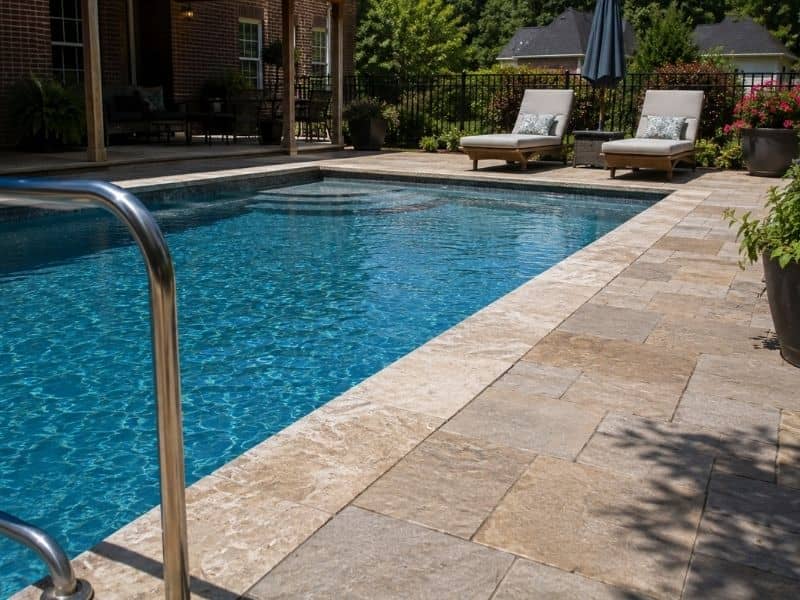
Building a pool comes with more choices than most homeowners expect, and one of the biggest is the masonry around the water. Pool masonry sets the tone for how the whole space feels, from the first step outside to the moment you sit on the edge and dip your feet in. Before any brick or stone goes down, a construction survey helps map out the yard, check the slope and plan where water needs to go. Get that step right, and everything built on top of it, including your pool masonry, works better and lasts longer.
Pool Masonry Surfaces That Stay Comfortable Under Alabama Sun
Alabama summers stretch on for months, and pool decks sit right in the sun for most of the day. Dark, dense materials soak up heat fast and hold onto it, which makes barefoot walking painful by early afternoon. Lighter colors and textured finishes stay cooler because they reflect more light and don’t store as much warmth.
Texture matters just as much as color. A smooth, polished surface looks nice in photos, but it turns slick the second it gets wet, and it heats up quickly too. A surface with a bit of grip, like a brushed or textured finish, stays safer underfoot and doesn’t get as hot to the touch.
Homeowners in Auburn often ask which surface feels best on a July afternoon. The answer usually comes down to picking a lighter shade with some texture built in, especially around the areas kids run through the most. Small choices like this make a real difference every single day the pool gets used.
Pool Coping Details That Make Getting In and Out Easier
Coping is the edge that caps off the pool, and it does more work than people realize. The shape of that edge decides how comfortable it feels to sit on, lean against or push off from when you get out of the water.
A rounded edge feels softer under legs and hands. A sharp, square edge might look modern, but it can dig into skin during a long pool day. Bullnose coping, which curves smoothly over the top, tends to be the more comfortable pick for families who spend hours by the water.
Grip counts here too. Wet feet need something to hold onto near ladders and steps, so a slightly textured coping surface helps stop slips right where people are most likely to fall. Smooth stone might photograph well, but a textured edge earns its keep every time someone climbs out dripping wet.
Getting these details right up front saves headaches later. Redoing coping after a pool is finished costs far more than planning it correctly the first time.
Low-Maintenance Pool Masonry for a Long Swimming Season
Alabama’s pool season runs long, often from early spring through October. That means months of sunscreen, splashed water, dirt and grass clippings tracked across the deck. Some surfaces hide that mess better than others.
Porous materials soak up oils from sunscreen and lotion, leaving stains that get harder to remove the longer they sit. A denser, sealed surface resists that kind of staining and wipes clean with a hose and mild soap instead of a scrub brush.
Grout lines deserve attention too. Wide, deep grout joints collect dirt and algae over time, while tighter joints with a sealed finish stay cleaner with less effort. Choosing the right combination from the start means fewer weekends spent scrubbing and more time actually swimming.
Drainage Around Pool Masonry That Helps Keep Surfaces Cleaner
Water that has nowhere to go becomes a problem fast. Standing puddles on a pool deck attract algae, leave mineral stains and turn walking surfaces slick even after the sun comes back out.
A pool deck should slope gently away from the water, guiding runoff toward a drain instead of letting it pool near chairs and walkways. In Auburn’s mix of heavy summer rain and dry stretches, that slope keeps the surface drying out fast instead of staying damp for days.
Drains placed at the low points catch debris before it builds up, and channel drains along the edges of larger decks stop water from pooling in low spots. Skipping this step during construction almost always leads to bigger cleaning headaches, and sometimes cracked masonry, a few years down the road.
Easy-Care Pool Masonry Choices for Year-Round Outdoor Use
Pool masonry doesn’t get a break once the water cools off. Alabama winters are mild, so the deck stays exposed to weather and foot traffic even during the months when the pool sits empty.
Materials that expand and contract too much with temperature swings can crack over time. It helps to choose masonry rated for the kind of freeze and thaw cycles that show up in the region, even if they’re brief. A quality sealant reapplied every couple of years also protects the surface between busy swimming seasons.
Furniture placement plays a role as well. Moving chairs and tables around instead of leaving them in one spot for months prevents uneven fading and keeps the surface looking consistent everywhere, not patchy in a few high traffic spots.
Frequently Asked Questions
What type of masonry is best around a pool?
The best choice depends on a few things: how slip-resistant it is, how much heat it holds onto, how it handles constant water exposure and how much upkeep you’re willing to do. No single material wins in every yard, so it comes down to matching the surface to how the pool actually gets used.
How do you keep pool masonry clean?
Regular sweeping keeps dirt and debris from building up between deeper cleanings. A hose and mild soap handle most day-to-day grime. Removing leaves, grass or other organic material quickly stops stains from setting in before they soak into the surface.
Does pool masonry get hot in Alabama?
Yes, and how hot depends on a few factors. Direct sun exposure, the density of the material, its color and its texture all play a role. Darker, smoother surfaces heat up the most, while lighter, textured ones stay noticeably cooler underfoot.
How can pool masonry be made easier to maintain?
Picking a surface finish suited to constant water exposure is a good starting point. Planning drainage so water doesn’t sit on the deck helps too, and choosing materials that hold up to frequent cleaning without staining or wearing down keeps maintenance manageable season after season.
What should I consider when choosing pool masonry for an extended swimming season?
Think about how comfortable the surface feels underfoot, how it handles constant splashing, how often you’re willing to clean it and whether it drains well. Auburn’s long warm season means the deck gets used almost daily for months, so comfort and upkeep both deserve real thought before construction starts.
