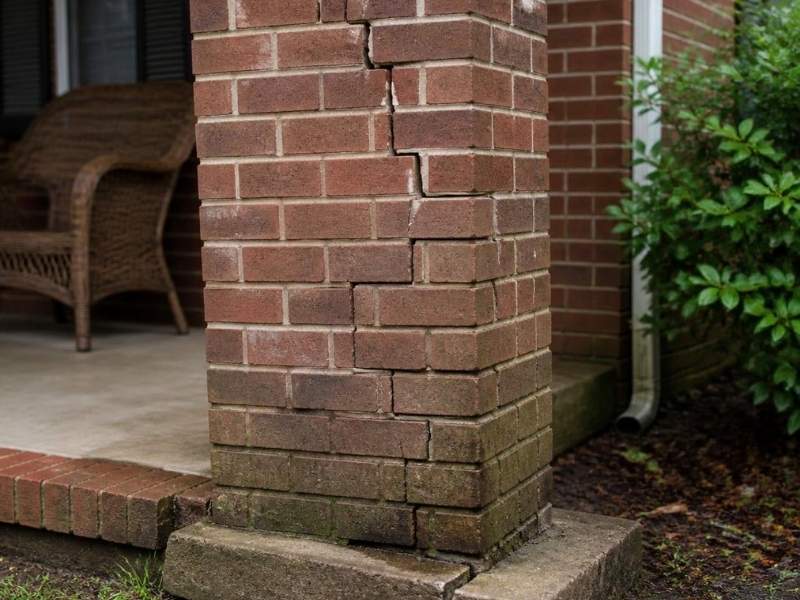
A brick column can look fine on the outside and be failing on the inside. That’s the trap. Brick columns hold up porches, gates, fences and mailboxes, so a hidden problem can turn into a safety issue fast. A quick patch or a fresh coat can cover the signs for a while. It won’t fix what’s really going on.
Some column problems are skin deep. A patch handles those fine. Others start at the footing or deep in the core, and no surface fix will hold. Knowing the difference saves you from paying twice.
What Surface Repair Actually Fixes
Surface repair fixes what stays on the surface. That covers a narrow set of problems.
A mason can repoint crumbling mortar joints. They can swap a cracked face brick or patch a chipped edge. They can clean stains and seal a fine crack. These jobs work when the column below is still sound.
The catch is simple. Surface work assumes the core and the base are solid. If they aren’t, you’re painting over a problem that keeps growing. On a project with a row of matching columns, that hidden growth can spread from one to the next before anyone notices.
Cracks That Warn of Real Movement
Not every crack is skin deep. Some point to real movement in the column.
A thin hairline crack is often just age. A wide crack, a stair-step crack through the mortar, or a gap that keeps growing is a warning. That kind of crack means something shifted. The fix has to reach the cause, not fill the gap and hope.
Watch for these signs:
- Cracks wider than a coin’s edge
- Stair-step cracks that follow the mortar lines
- Gaps that grow month to month
- One side of the column pulling away
Fill a moving crack and it comes back fast. The column keeps shifting under the patch, and the new mortar just splits again. Mark the ends of a crack with a pencil and a date, then check it in a month. If the line has moved past your mark, the column is still on the move.
A Leaning or Bulging Column Means Trouble Below
A column that leans or bulges has a problem at the base. No surface fix will straighten it.
Columns sit on a footing below the ground. When that footing settles, sinks or heaves, the column tips with it. Poor drainage around the base is a common cause. Water softens the soil, and the weight does the rest.
A bulge is its own warning. It can mean the core is breaking apart or the brick is pushing outward. Either way, the load path is failing. That calls for a mason to open it up and look, not smear on more mortar. A quick way to gauge a lean is to hold a level against two sides, since a column should read plumb top to bottom.
Water and Rust Inside the Column
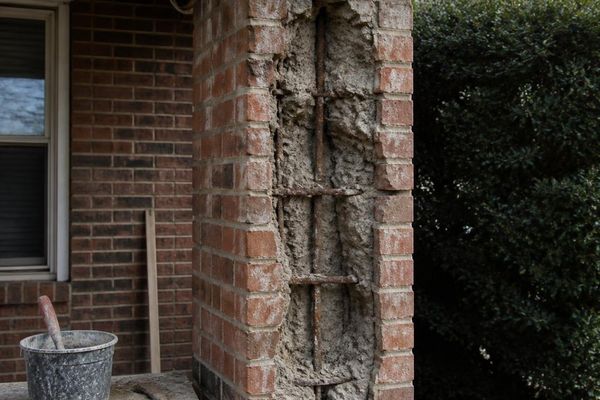
Many brick columns aren’t solid. Some have a hollow core. Others hide a steel post or rebar inside. Water is the enemy of both.
A Failed Cap Lets Water In
The cap is the column’s roof. When it cracks or goes missing, rain runs straight into the core. That water sits, freezes and expands. Over a few winters, it pushes the brick apart from the inside.
Rusting Steel Breaks Brick Apart
Hidden steel rusts once water reaches it. Rust takes up far more room than clean steel. As it swells, it cracks the brick around it and pushes the faces outward. A patch on the surface does nothing to stop the rust working below it. Left alone, the swelling can split a column open along its full height.
Repair or Rebuild: How to Make the Call
When the damage reaches the base or the core, a rebuild often beats another patch. Repeated patching costs more over time.
A mason may rebuild just the top section down to sound brick. A worse case needs a full teardown and a new footing. Good rebuilds also fix the cause. That means a solid cap, better drainage and rust-free steel or ties.
Signs a rebuild is the smart call:
- Cracks that return after every repair
- A clear lean or a growing bulge
- A soft or crumbling core
- Rust stains bleeding through the brick
Have a mason inspect before you decide. A short look now can keep a column from coming down later. Ask them to price both the patch and the rebuild, so you can weigh the real cost of each against how long you plan to keep the property.
Frequently Asked Questions
What causes a brick column to crack?
Cracks come from movement, water or age. A settling footing or shifting soil pulls the brick apart. Trapped water freezes and expands inside the column. Rusting steel in the core can also crack the brick outward.
Can I just patch a cracked brick column myself?
You can patch small, stable cracks that are only cosmetic. A moving crack, a lean or a bulge needs a mason. Those signs point to damage below the surface. Patching them only hides the problem while it grows.
How do I know if my column has steel inside?
Many columns built as gate or fence posts hide a steel post or rebar. Rust stains on the brick are a strong clue. A mason can check with a probe or a metal scanner. Knowing what’s inside changes how the repair is done.
Why does water damage a brick column so fast?
A column takes water from the top and the sides. A cracked or missing cap lets rain pour into the core. That water freezes, expands and works the brick loose. It also rusts any steel hidden inside.
Is it cheaper to repair or rebuild a brick column?
Small surface repairs are cheaper up front. But if the base or core is failing, repeated patches add up fast. A proper rebuild fixes the cause and lasts far longer. Over time, that usually costs less than patching again and again.
