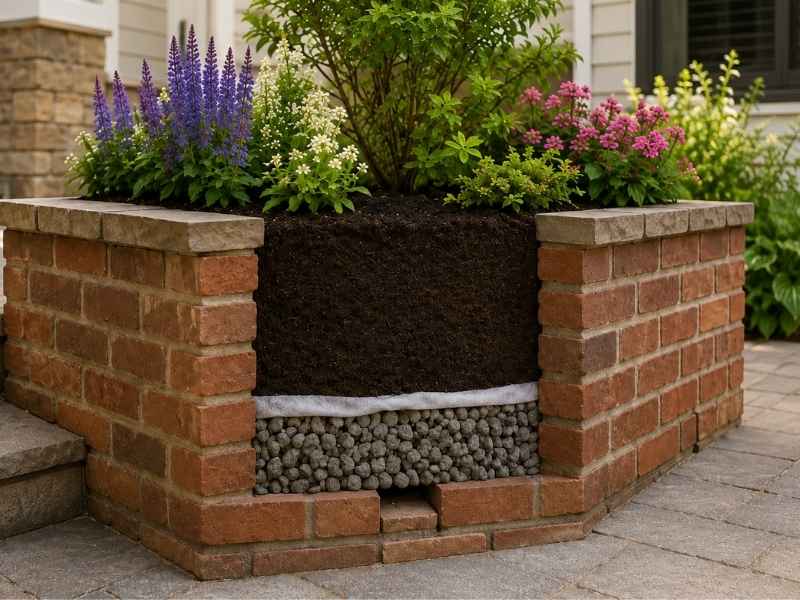
Brick planters look great in almost any yard. They give plants a clean, sturdy home and add real structure to a garden. But there’s a problem many people don’t think about until it’s too late: water. If a brick planter can’t drain properly, the soil stays soggy, roots rot, and the bricks stay wet far longer than they should. Getting drainage right from day one saves a lot of headaches later.
Build a Drainage Path Beneath the Soil
Every brick planter needs a way for water to leave once it hits the bottom. Without one, water just sits there. It pools under the roots, turns the soil into mud, and starves plants of the air they need to grow.
The fix is simple in theory. Before soil goes in, a layer of gravel or another free-draining material should line the bottom of the planter. This layer gives water somewhere to go instead of collecting in one spot. Rain and irrigation pass through the soil, hit the gravel, and keep moving down and out.
This is different from drainage on a garden wall. A brick planter holds soil inside four walls, so water has nowhere to run off unless a path is built in from the start. Skipping this step is one of the most common reasons planters end up with mushy roots and stained brick.
Weep Openings Give Trapped Water a Way Out
Even with a good gravel base, water still needs an exit point. That’s where weep openings come in. These are small gaps left in the brickwork, usually near the bottom of the wall, that let moisture escape instead of building up inside.
Weep openings work best when they’re planned during construction, not added afterward. A mason can place them where they’ll actually catch water as it moves through the drainage layer. Drilling holes into finished brickwork later is a rougher fix. It can crack mortar joints, weaken the wall, and still miss the spot where water is actually collecting.
Think of weep openings as pressure valves. Without them, moisture has no clear path out, so it lingers against the brick and the roots below.
Separate Soil From the Drainage Layer With the Right Barrier
Here’s something people miss: gravel doesn’t stay clean forever. Over time, soil particles wash down and settle into the gaps between the stones. Slowly, the drainage layer clogs up and stops doing its job.
A filter fabric placed between the soil and the gravel solves this. Water passes through the fabric just fine, but soil particles get stopped. The gravel layer stays open and functional for years instead of filling in after one or two rainy seasons.
Skipping this barrier is an easy mistake because the planter looks fine on the surface. The real damage happens underground, where nobody sees it until plants start struggling and water stops draining the way it used to.
Water Pressure Adds Up Against Brick Planter Walls
Wet soil is heavy soil. When water can’t drain, saturated dirt pushes outward against the inside walls of the planter. That pressure builds slowly, but it’s real, and it’s constant every time the planter gets watered or rained on.
Good drainage takes weight off the walls by moving water out before it can build up. This matters more as planters get taller or wider, since more soil means more potential pressure pushing against the brick.
This isn’t the same issue as a retaining wall holding back a hillside. A brick planter is a contained box, so the pressure comes from water trapped inside a fixed space, not from a slope pressing in from outside. Planning for it means thinking about planter size and wall thickness together, not just picking a design because it looks nice.
Keep Drainage Accessible for Future Maintenance
A planter that drains well on installation day won’t stay that way forever unless it’s easy to check on. Roots grow, mulch piles up, soil settles, and leaves collect near the base. All of that can quietly cover weep openings and slow down drainage without anyone noticing right away.
Planters designed with maintenance in mind leave drainage points visible and reachable. An owner should be able to spot a blocked weep hole and clear it without tearing into the brickwork to get there. That one design choice, made early, can save a full rebuild years down the road.
Frequently Asked Questions
Do brick planters need drainage holes?
Most outdoor brick planters need some way for excess water to escape. The exact setup depends on the planter’s size, how it was built, where it sits, and what surface surrounds it, so there’s no single answer that fits every planter.
What happens when water cannot drain from a brick planter?
Trapped water saturates the soil and keeps building pressure inside the planter. It also keeps the brick exposed to moisture for long stretches, which isn’t good for the masonry over time. Plants suffer too, since soggy roots struggle to get the oxygen they need.
Can drainage be added after a brick planter has already been built?
Sometimes, yes. But retrofitting drainage is trickier than building it in from the start, since the soil, brickwork, and any existing outlets are already in place. It’s worth having a masonry professional look at the planter before any openings or changes get made.
