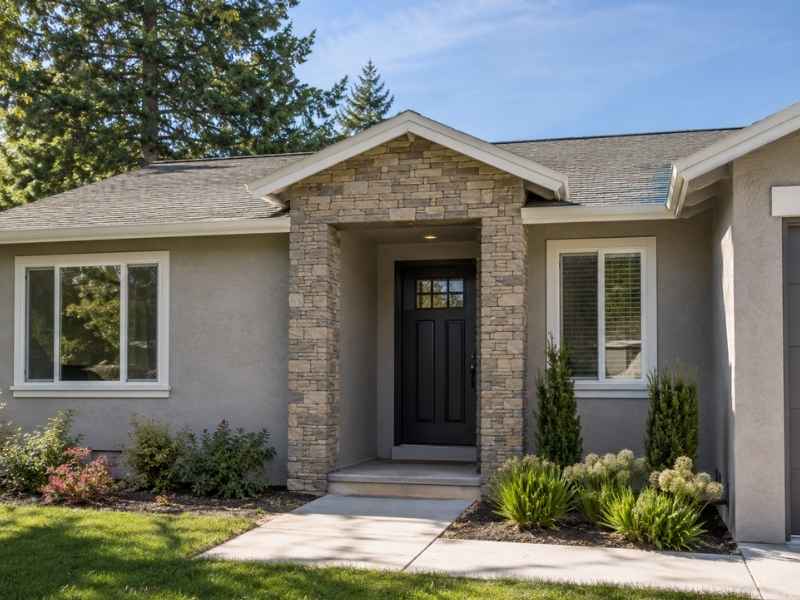
Stone entryways can fix a problem a lot of homes have without anyone quite naming it. The house looks fine, but flat. Nothing catches the eye when you pull into the driveway. Adding stone around the front door is one of the fastest ways to change that, and it doesn’t require covering the whole house in it. Done right, a stone entryway gives a plain facade real depth while keeping the rest of the exterior exactly as it is.
Frame the Front Door Without Covering the Entire Facade
The biggest mistake homeowners make with entryway stone is treating it like a full exterior makeover. It’s not. The goal is to frame the door, not replace the siding, brick, or stucco that already covers the house.
Think of the stone as a spotlight instead of a blanket. It should wrap the doorway, maybe extend a bit into the porch area, and then stop. Where it stops matters just as much as where it starts. A treatment that fades out awkwardly, or one that keeps spreading because nobody sets a clear edge, ends up looking unplanned.
Proportion is the real test here. The stone should feel sized to the door and porch, not sized to fill however much wall space is available. A small entry doesn’t need a huge stone surround, and a grand double door can usually support more coverage without looking excessive. Walk across the street and look at the whole front of the house. If the stone reads as the main event and everything else feels like background, the proportions are off.
Use Stone Returns to Give the Entryway Real Visual Depth
A flat strip of stone glued onto a wall looks exactly like what it is: decoration. Real depth comes from returns, which means carrying the stone around a corner, into a recessed opening, or along a short side wall instead of stopping it in one straight line.
This is where a lot of otherwise decent entryways fall short. The stone hits the edge of the door frame and just ends, leaving a hard, flat line that reads as pasted on rather than built in. Wrapping that same stone around the corner, even by a foot or two, changes everything. It gives the eye a second surface to read, and that second surface is what creates shadow and dimension.
Recessed entries are a natural fit for this approach. If the door already sits back from the main wall, running stone into that recess and around the return walls makes the whole opening feel carved rather than applied. The stone follows the architecture that’s already there instead of fighting against it.
Choose Stone Size and Texture That Suit a Simple Exterior
A big, rough stone makes a statement. A small, uniform stone makes a whisper. Neither is wrong, but picking the wrong one for the house is a common misstep.
A large stone with heavy texture and deep shadow lines creates weight. That works well on homes with substantial roofline, thick trim, or other heavy architectural details already in place. Drop that same stone onto a simple, low-profile ranch house, and it can overwhelm the entry instead of complementing it.
A smaller, more consistent stone does the opposite. It reads as quiet and refined, which suits homes that already have clean, understated lines. The texture still adds interest, just without shouting. Before choosing a stone size, look at what the house is already doing. A busy roofline and heavy trim can handle bold stone. A simple, streamlined exterior usually looks better with something calmer.
Create a Clear Transition Between Stone and Existing Exterior Materials
Every stone entryway eventually has to meet something else, whether that’s brick, siding, stucco, or a different exterior finish entirely. How that meeting point is handled decides whether the stone looks intentional or bolted on as an afterthought.
A clean transition needs a deliberate stopping point. Trim boards, corner boards, or a change in wall plane all give the eye a natural place to shift from one material to the next. Without one of these markers, a stone that simply stops mid-wall looks unfinished, like the project ran out of budget halfway through.
Architectural features already on the house can do a lot of this work. A window, a porch column, or a change in the roofline can all serve as a natural edge where the stone treatment ends and the original exterior picks back up. Using these existing features instead of picking a random stopping point makes the whole transition look planned from the start.
Add Dimension With Recesses, Openings, and Entryway Details
A recessed door, a covered porch, or sidelights next to the entrance already create shadow and depth on their own. Stone can highlight that existing shape instead of trying to invent new depth from scratch.
Running stone along the sides of a recessed opening emphasizes the depth that’s already built into the architecture. The shadow the recess casts naturally gets stronger when stone catches the light differently than the surrounding wall material. Sidelights work the same way. A narrow band of stone framing them draws attention to a detail that might otherwise go unnoticed.
The goal in this section is restraint, not addition. There’s no need to bring in columns, extra steps, or other masonry elements to create interest. The entryway’s existing shape is often doing more work than homeowners realize. Stone just needs to bring that shape into focus.
Frequently Asked Questions
How much stone should be used around a front entryway?
There’s no single correct amount. The right quantity depends on the size of the entrance and the overall facade. The stone should create a focal point without becoming the dominant feature of the house.
Does entryway stone need to match other masonry on the house?
It doesn’t need to be identical. What matters more is that the color, texture, scale, and mortar coordinate with the existing exterior materials so the final look feels deliberate rather than mismatched.
Can stone be added around an existing front entrance?
In many cases, yes. But the existing wall construction, available space, moisture management, transition points, and support requirements all need a proper evaluation before the work begins.
