
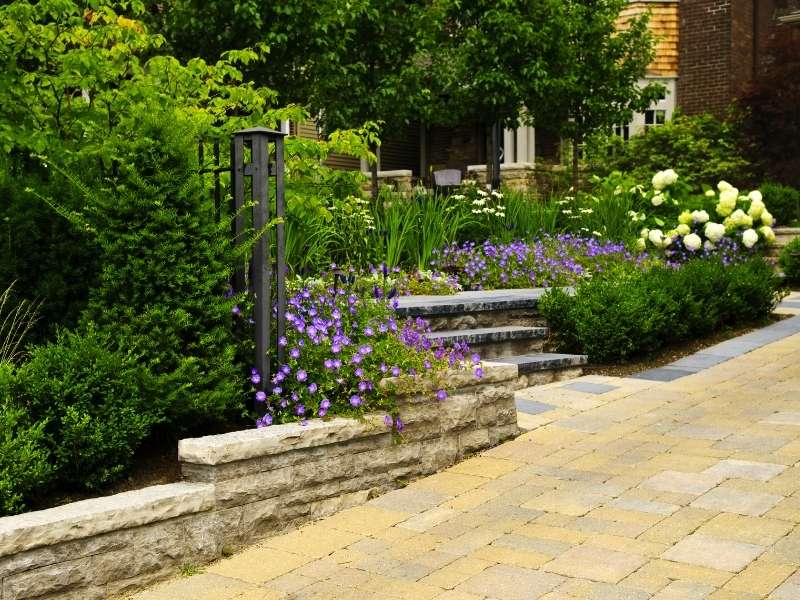
Stone pavers work best in hotel entries when the design, the base and the drainage are planned together. Pattern and color get the attention, but the layers underneath decide how the surface performs in year five. If you own, manage or design a hotel property in Auburn or the surrounding area, settle layout, grade and base preparation before you pick a stone.
Guests form an opinion of a hotel before they reach the front desk. The courtyard is the first thing they walk across, and it either feels welcoming or it feels like a hurdle with rolling suitcases. A well-built stone paver surface does both jobs. It looks good and it holds up under constant foot traffic.
Designing Hotel Entry Courtyards With Stone Pavers
A hotel entry courtyard is the paved arrival space between the drop-off area and the front doors. Stone pavers are individual pieces of natural stone set in a prepared base, so each piece can be lifted and replaced if it cracks or settles.
Start with how guests move. Map the drop-off point, the door, the luggage path and any seating. Then place features around that flow, not the other way around.
Courtyards often include more than paving. An outdoor fireplace can anchor a seating area. A small outdoor kitchen or bar counter works for resort-style properties. A retaining wall can hold a planting bed or manage a change in grade. Each feature changes how the paving should be laid out, so bring them into the plan early.
Stone and brick both suit hotel work. Brick pavers offer a classic, uniform look and can match existing brick masonry on a building. Natural stone offers more variation in color and texture. The better choice depends on appearance, traffic, maintenance, budget and what is already on the property.
Choosing Stone Paver Patterns for Guest Arrival Areas
Pattern affects looks, but it also affects how the surface wears and how easy it is to repair. A pattern with tight, consistent joints tends to feel smoother underfoot than a rough, irregular one.
Common choices include:
- Running bond, where pieces stagger like brickwork. It reads as clean and traditional.
- Herringbone, which locks pieces together and handles vehicle and heavy foot traffic well when installed correctly.
- Random or irregular patterns, which give a natural look but need careful work to keep joints even.
- Borders and banding, which frame the courtyard and mark transitions.
Pick the pattern with the building in mind. A formal entry with brick masonry may call for a simple, orderly layout. A rustic lodge may suit a more natural pattern. Ask your mason to show samples laid out in daylight, because stone color shifts between indoor lighting and open sky.
Also compare slip resistance. Surface texture varies by stone type and finish, and a polished face may feel different from a honed or textured one when wet. Ask for the finish and the supplier’s slip data if it is available.
Planning Walkways and Luggage-Friendly Transitions
Wheeled luggage is the hardest test a courtyard will face. Wide joints, lipped edges and uneven pieces make every suitcase rattle. Guests notice that.
Keep the main arrival path wide enough for two people with bags to pass each other. Exact widths depend on the design and on accessibility rules, which vary by property, local code and project scope. Confirm them with your architect and the local building department before work begins.
Pay close attention to transitions. These are the spots where one surface meets another:
- Where the courtyard meets the driveway or drop-off lane
- Where pavers meet the building threshold
- Where a walkway steps up or down
- Where stone meets a lawn, planting bed or retaining wall
Each transition should be flush or have a deliberate, clearly marked change in height. Small unplanned lips cause trips and catch wheels. If the site has a slope, a mason can often use gentle ramps, short landings or a low retaining wall to manage the grade without forcing steps into the main path.
Managing Courtyard Drainage and Surface Stability
Water is the main cause of failed paver surfaces. If it pools or runs under the stone, the base softens and pieces shift.
Plan the slope before the first stone is set. The surface should carry water away from the building and toward a drain, a swale or a planted area. The right slope depends on the site, the pavement type and the drainage design, so have it reviewed by the project engineer or designer.
Many yards in East Alabama sit on clay-heavy soil, which drains slowly. Soil conditions vary from lot to lot, so ask for a soil assessment where the design depends on it. Clay can hold water below the base and let it move. A properly prepared base helps keep the surface stable, but the details depend on soil, slope, load and design.
Base preparation generally includes:
- Removing topsoil and soft material
- Placing and compacting layers of aggregate base
- Adding a leveling bed for the pavers
- Installing edge restraints so the field cannot spread
Skipping or shortening any of these steps is the usual reason a courtyard looks fine for a season and then settles. Confirm the base depth and materials in writing, since they should match the expected traffic, including any delivery or service vehicles that cross the courtyard.
Maintaining Stone Pavers in High-Traffic Hotel Entrances
Maintenance is easier when it is planned at installation. Joints filled with the right material resist weeds and washout. Sealer is optional on many stone types, and whether it helps depends on the stone, the finish and how the area is used.
A simple routine covers most needs:
- Sweep daily or as traffic demands.
- Rinse stains quickly, especially from food, oil and landscape mulch.
- Check joints each season and refill where material has washed out.
- Look for settled or loose pieces and have them reset.
- Ask the mason which cleaners and de-icing products are safe for your stone.
One advantage of pavers is repair. A damaged piece can be lifted and replaced without tearing up the courtyard. Keep a small supply of extra stone from the original order, since color and texture can differ between batches.
Existing masonry deserves a look too. If your property has a brick stoop, a stone planter or an older retaining wall, check its condition before new paving goes in. Repairs are easier before the surrounding surface is finished.
Frequently Asked Questions
Are stone pavers a good choice for a hotel entrance?
They can be. Stone pavers handle heavy foot traffic when the base is built correctly, and individual pieces can be replaced. The right stone depends on appearance, slip resistance, budget and maintenance needs.
Should I choose brick pavers or stone pavers?
Neither is always better. Brick pavers offer a uniform look and match existing brick masonry well. Stone pavers offer more natural variation. Compare traffic, upkeep, climate and the style of the building.
How do I keep luggage rolling smoothly across pavers?
Use tight, even joints, a flat finish and flush transitions. Test samples with a rolling bag if you can. Avoid very rough textures along the main arrival path.
